Why You Wake Up at Night (And Your Mattress Might Be the Reason)
Waking during the night is measured in sleep research as WASO, wake after sleep onset. It's one of the strongest predictors of next-day fatigue, and mattress properties account for a larger portion of it than most people expect.
If you fall asleep fine but consistently wake in the night, you have a different problem than someone who lies awake for an hour before sleep arrives. Sleep research distinguishes between these as sleep onset insomnia and sleep maintenance insomnia. They have different causes, different mechanisms, and different solutions.
The metric researchers use for nighttime waking is WASO: wake after sleep onset. It measures the total time spent awake between initial sleep onset and final waking, and it's one of the most sensitive indicators of sleep quality. Even moderate WASO, 30 to 45 minutes per night, produces measurable next-day impairment. A full night's time in bed does not protect you from this.
Your mattress contributes to WASO through three mechanisms, each with distinct physiology.
The difference between healthy waking and WASO
It is normal to briefly awaken multiple times per night. EEG studies of healthy sleepers show between 3 and 5 brief awakenings per night, most lasting under 30 seconds and leaving no memory. These are normal transitions between sleep cycles.
WASO occurs when awakenings extend beyond this threshold or recur frequently enough to prevent cycling through sleep stages properly. The difference between waking briefly and cycling back into sleep versus lying awake for 20 minutes before returning is the difference between normal sleep architecture and sleep maintenance insomnia.
What determines whether an awakening resolves quickly or extends? Largely: whether the thing that caused the awakening is still present when you return to light sleep. If you wake because you got too hot and the mattress is still trapping heat, you wake again. If you woke because of pressure and the pressure is still there, the signal fires again. This is why mattress-related WASO tends to be recurring throughout the night rather than a single prolonged waking.
Common misconception: "I wake up because I'm a light sleeper." Arousal threshold varies by sleep stage more than by individual trait. If you are waking consistently at the same time each night (often the late-cycle REM periods after 4am), a pattern-based cause like heat buildup or pressure is more likely than being constitutionally light.
Mechanism 1: Pressure-triggered repositioning
When tissue over a bony prominence is compressed beyond approximately 32 mmHg, local blood flow drops and the brainstem generates a repositioning command. During lighter sleep stages (N1 and N2), the body executes this movement without producing a full awakening. During REM, muscles are paralyzed and cannot reposition, so the signal accumulates until it overrides REM atonia and produces an awakening.
This is why people so often wake in the early morning (when REM dominates) with shoulder or hip soreness. The mattress has been creating pressure at that site for hours. The body tolerates it through deep sleep, where repositioning works silently. But during the long REM episodes that characterize the second half of the night, the unrelieved pressure eventually forces a waking.
Research: Pressure mapping studies found that traditional innerspring and firm foam mattresses routinely exceeded the 32 mmHg capillary occlusion threshold at the hip and shoulder in lateral sleeping positions. Mattresses with adaptive comfort layers maintained pressures below this threshold across the same positions, with corresponding reductions in subjective nighttime waking in crossover studies. (Verhaert V, Ergonomics, 2011)
Who this affects most: Side sleepers. The hip and shoulder take concentrated load in lateral positions. A mattress that does not have enough give at the shoulder and hip to distribute this load will create pressure peaks regardless of how firm or soft it feels on first impression.
Mechanism 2: Thermal awakening
Because REM sleep suspends active thermoregulation, heat accumulating in the mattress during the first hours of sleep gradually raises your skin temperature through the night. By the second half of the night, when REM is dominant, that temperature difference can be large enough to trigger an arousal.
This is distinct from hot flashes or night sweats, which are driven by hormonal vasomotor events. Mattress-related thermal awakening is slower and subtler: a gradual warming that eventually crosses an arousal threshold rather than a sudden spike. People experiencing it often describe waking up warm and slightly damp, removing a layer, and then returning to sleep more easily than they expected.
Research: Experimental studies using skin temperature manipulation found that progressive skin warming during sleep produced dose-dependent increases in EEG-defined arousal events. The effect was significantly larger during REM than during N2 or N3, consistent with the thermoregulatory shutdown characteristic of REM. (Raymann RJEM, Brain, 2008)
Pattern to watch for: If you wake consistently in the 3am to 6am window feeling warm, and fall back asleep more easily after moving to a cooler spot or removing covers, heat accumulation in the mattress is a likely contributor. The timing matches the period when REM is longest and thermoregulatory protection is lowest.
Who this affects most: Anyone sleeping on dense foam, heavier individuals whose bodies generate more heat during sleep, and people in warmer rooms. Memory foam traps body heat in its closed-cell structure more than any other common mattress material.
Mechanism 3: Partner motion transfer
Every time your partner moves, some of that movement propagates through the mattress to your side. The amount depends on the mattress's motion isolation characteristics. For most interconnected innerspring systems, the transmission is substantial.
During N2 and N3, your arousal threshold is high enough that moderate motion events pass without waking you. During REM, that threshold drops. The same movement from your partner that you slept through at 11pm is more likely to wake you at 4am.
Research: Actigraphy and polysomnography studies of co-sleeping couples found that partner movements accounted for a significant proportion of WASO in both individuals, with mattress type moderating the effect. Innerspring mattresses produced partner-attributed WASO events at roughly double the rate of foam or pocketed-coil hybrids. Importantly, participants were often unaware that their awakenings were partner-triggered. (Lichstein KL, Behavior Research and Therapy, 2008)
Who this affects most: Couples where one partner is a more active sleeper, has restless leg symptoms, or has a significantly different sleep schedule. The sleeping partner's WASO can be substantially driven by the active partner's movements without either person realizing the connection.
How to tell which mechanism is causing your WASO
| Pattern | Most likely cause |
|---|---|
| Wake at consistent time in early morning, often with shoulder or hip pain | Pressure-triggered repositioning |
| Wake feeling warm or damp, fall back asleep easily after moving | Thermal accumulation |
| Wake immediately or shortly after partner moves | Motion transfer |
| Wake at unpredictable times for no clear reason | Often a combination, or non-mattress cause (apnea, stress, alcohol) |
Worth noting: If you wake consistently at the same time every night and cannot attribute it to any of the above, ask your doctor about sleep apnea. Obstructive apnea produces consistent nighttime awakenings and is substantially underdiagnosed, particularly in people who do not snore loudly or are not overweight.
Three picks matched to specific WASO causes
Nectar's foam construction provides the strongest motion isolation available. If partner movement is the primary cause of your WASO, a foam bed eliminates the transmission pathway almost entirely. The Nectar Premier's cooling cover and gel-infused foam layer address the heat concern that foam beds typically introduce. Not the most responsive feel, but for motion-related WASO in couples, it is the most direct solution.
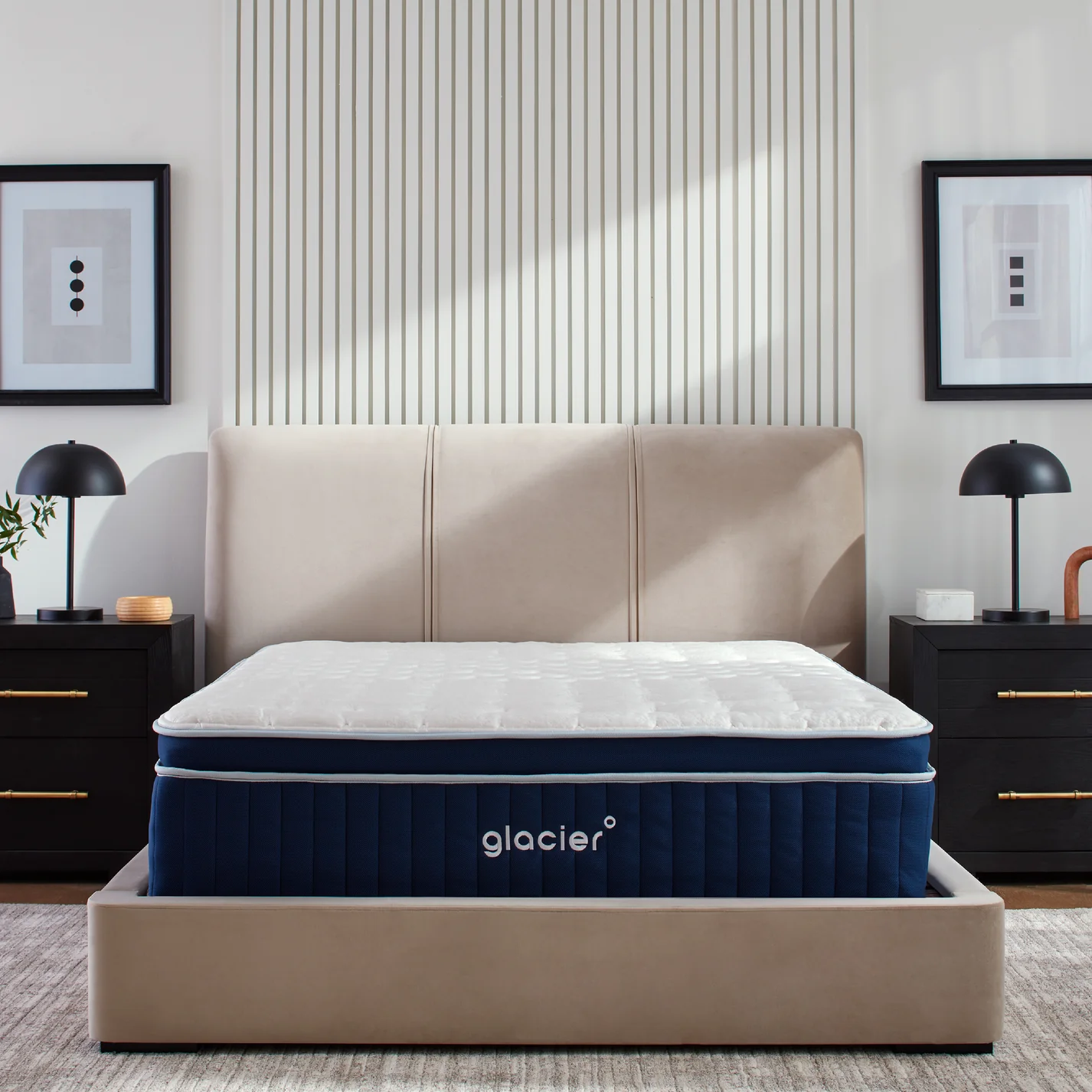
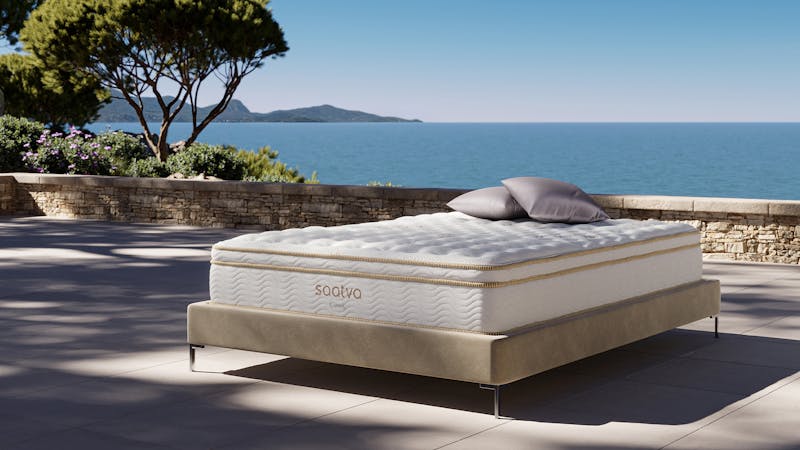
The pocketed coil construction provides meaningful motion isolation (not quite foam-level, but close) while the coil system allows airflow that foam cannot match. Good for WASO that seems to have both a thermal and motion component. The euro top softens the surface enough to reduce pressure peaks at the shoulder and hip for most side sleepers.
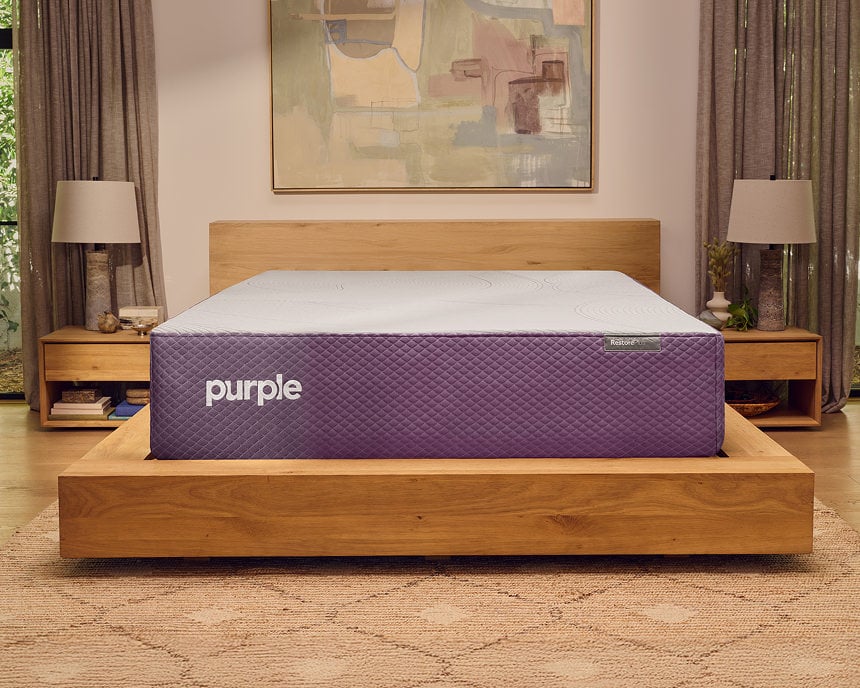
If heat is the dominant cause, the GelFlex Grid construction is the most thermally neutral sleeping surface available. The open grid structure eliminates the heat-trapping mechanism entirely rather than attempting to offset it with cooling additives. Also provides good pressure distribution for side sleepers via the grid's local compression response.
Related Reading
Full ranked list
Best Mattress for Back Pain
See every mattress we tested for back pain, ranked by performance score.
Top Picks for Hot Sleepers
See full list →Ranked by test data
Not sure which mattress is right for you?
Take our 60-second quiz and we'll match you with the best options for your sleep style and budget.
Take the Free Quiz →