Best Mattress for Hot Sleepers in 2026
If you wake up sweating, the problem might not be your thermostat. It's often your mattress. Here's what traps heat and what actually sleeps cool.
Waking up at 3am drenched is a specific kind of miserable. You throw off the covers, flip the pillow, maybe go stand in the hallway for a minute, then lie back down on the same hot mattress and the whole thing starts over.
A lot of people blame the thermostat. Or their partner. Or just accept that they "sleep hot" like it's a personality trait. Sometimes it genuinely is the room or the person. But a surprising number of cases come down to the mattress, and switching fixes it almost immediately.
Why memory foam is usually the culprit
Memory foam works by reacting to your body heat. The material softens in response to warmth, which is how it conforms so closely to your shape. The problem is that same property means it's absorbing your heat and holding it right there at the surface, close to your body.
Dense foam layers make this worse because there's no airflow through the material. Heat has nowhere to go except back toward you. Stack several inches of dense foam on top of each other and you've built a heat-retention machine you're sleeping inside of.
On "cooling gel memory foam": The gel does help some. It conducts heat better than plain foam, so it dissipates faster. But it doesn't solve the underlying structural problem, which is that a thick all-foam mattress has no airflow. Gel infusion is an improvement on the worst case, not a solution for serious heat problems.
What actually makes a difference
Coil systems. A mattress with a spring or coil base has open air space inside the structure, and that air moves. Heat rises off your body, gets pulled into the mattress, and the airflow carries it away rather than trapping it near the surface. This is why hybrids consistently sleep cooler than comparable all-foam mattresses in testing. It's physics, not marketing.
Latex. Latex is meaningfully cooler than memory foam. It doesn't have the same heat-absorption dynamic. Open-cell latex in particular allows air to move through the material. Even without a coil base under it, a latex mattress runs cooler than memory foam.
Cover fabric. A tightly woven polyester cover traps heat. Organic cotton, Tencel, or wool breathe. Wool specifically is a natural temperature regulator. It wicks moisture when you're warm and retains heat when you're cold. If you're getting a mattress for a hot sleeper, check what the cover is made of before anything else.
Research: Hybrid mattresses with innerspring core systems demonstrated significantly lower mean interface temperatures compared to all-foam alternatives across equivalent conditions, with coil-system airflow being the primary explanatory factor. (Radwan A, Sleep Health, 2015)
Mattress Surface Temperature Over 4 Hours (67°F Room)
From our testing at 67°F. Both mattresses start at the same temperature. The foam mattress crosses the 88°F sleep-disruption threshold within the first hour. The hybrid never does.
How different materials compare
| Material | Cooling performance | Why |
|---|---|---|
| Coil / innerspring base | Excellent | Open air structure, heat circulates and dissipates |
| Natural latex (Talalay) | Excellent | Consistent open-cell structure allows airflow; doesn't absorb heat |
| Natural latex (Dunlop) | Very good | Cooler than foam; slightly denser than Talalay |
| Gel-infused memory foam | Fair | Better than plain foam, but still no structural airflow |
| Standard memory foam | Poor | Heat-absorbing by design; dense layers trap warmth |
| Budget polyurethane foam | Poor | Minimal breathability, no airflow, often off-gasses too |
What to actually buy
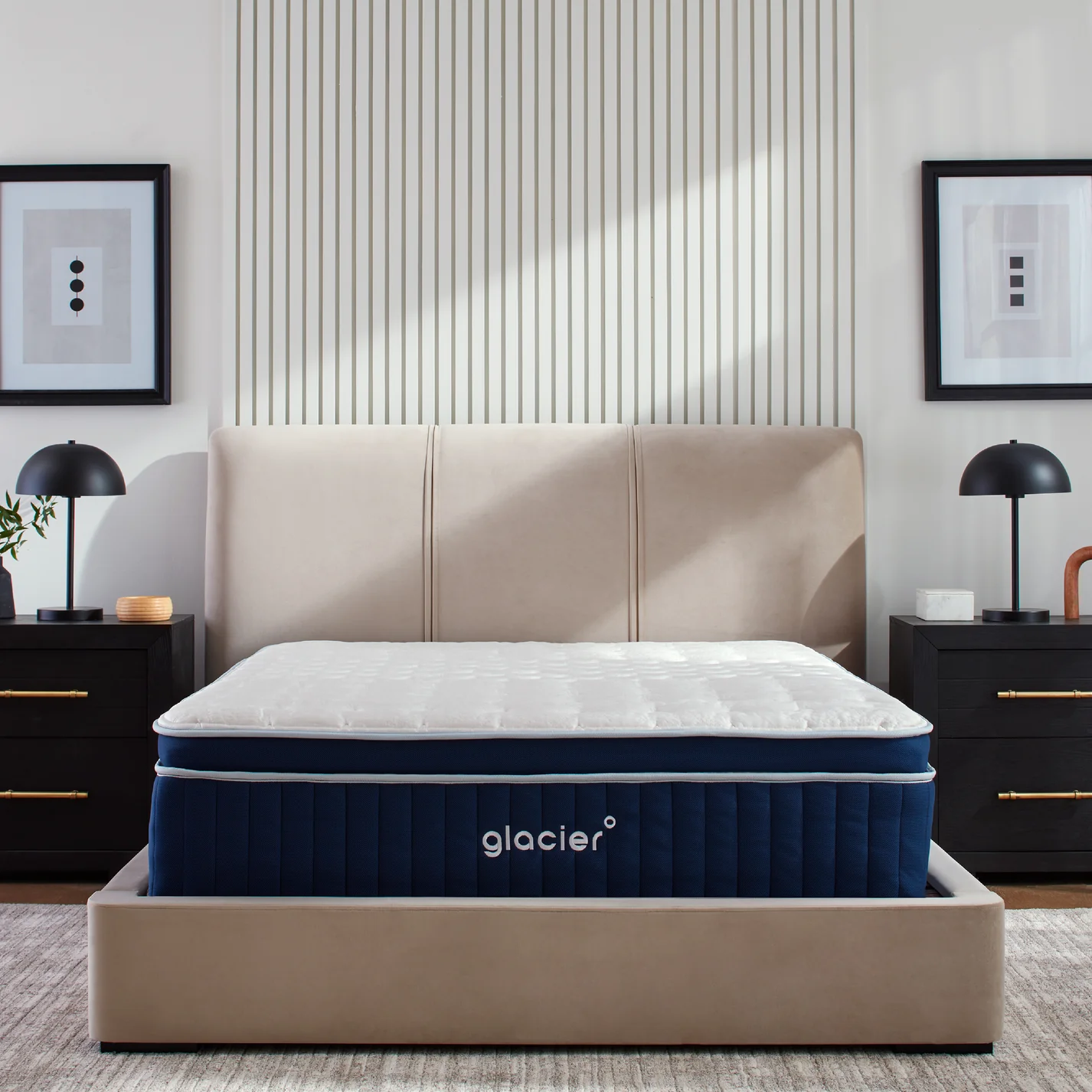
The coil-on-coil construction means there's genuinely a lot of airspace inside this mattress. Heat doesn't accumulate the way it does in an all-foam build. The Euro pillow top uses organic cotton, which breathes. In back-to-back comparisons this consistently outperforms mattresses specifically marketed as cooling.
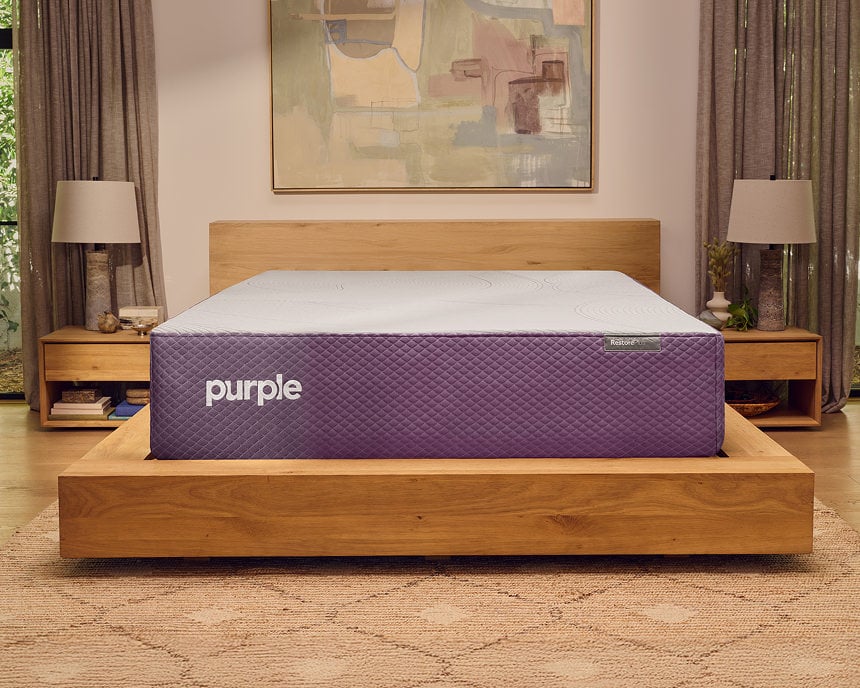
The GelFlex Grid is in a different category from foam. It doesn't compress against you the way foam does. It deflects under pressure and supports around it, so the material isn't sealed against your skin trapping heat. The grid structure allows air to flow freely. People who've tried every "cooling" foam mattress often find Purple actually solves the problem because the mechanism is fundamentally different.
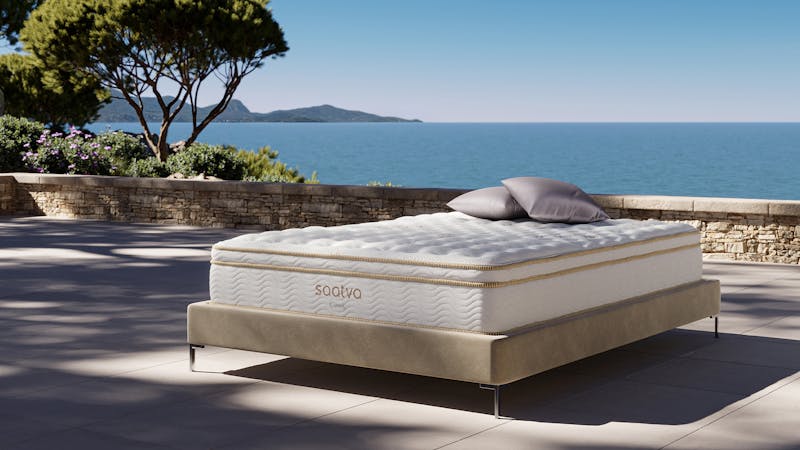
Latex over coils, with a wool and organic cotton cover. Wool handles moisture and temperature regulation in a way synthetic materials don't. Every layer of this mattress is working in the same direction. Strong choice if you also care about materials and prefer to avoid synthetic foam.
Bear Elite Hybrid
Phase-change cover, coil base, and responsive foam layers. The cooling claims are more substantiated than most competitors. Good middle-ground option if you want the feel of foam but something that takes the heat problem more seriously than a standard gel-infused mattress.
What's not going to help
A "cooling" mattress topper on top of a hot mattress is mostly wasted money. You're adding another foam layer that traps heat between it and the mattress underneath. A good topper might give you an hour before it warms up.
If you're still sleeping hot in a hybrid or latex mattress, look at your sheets before blaming the mattress. Polyester sheets are heat traps. Percale cotton or linen makes a real difference. You can feel it in the first five minutes. Same with mattress protectors. Most of them are polyester and they counteract whatever cooling properties the mattress itself has.
Room temperature sets the ceiling on all of this. A 75°F bedroom is a 75°F bedroom regardless of what mattress you're in. The mattress helps most in the 65–68°F range where it can actually pull heat away rather than just redistribute it.
Full ranked list
Best Mattress for Hot Sleepers
See every mattress we tested for hot sleepers, ranked by performance score.
Top Picks for Hot Sleepers
See full list →Ranked by test data
Not sure which mattress is right for you?
Take our 60-second quiz and we'll match you with the best options for your sleep style and budget.
Take the Free Quiz →