King vs Queen Mattress for Couples: What Actually Affects Sleep Quality
The choice between king and queen matters more than most people expect, but not always for the reason they think. The 16-inch width difference translates directly into personal sleep space, thermal comfort, and how often partners disturb each other. Here is what the data actually shows.
The king vs. queen decision usually gets framed around room size and budget. Those are real constraints. But the question worth asking first is: what does each size actually do to the quality of sleep you get?
The answer involves sleep space per person, thermal dynamics of two bodies in close proximity, and how size interacts with motion isolation. The 16-inch width difference between a queen (60 inches) and a king (76 inches) produces specific, measurable effects on each of these.
Personal space and sleep architecture
Sleep requires the body to cycle through positions throughout the night. Side sleepers reposition between left and right lateral positions. Back sleepers adjust lumbar position. Most people make 3 to 6 significant position changes per night. Each of these is more easily accomplished on a surface with adequate personal space.
On a queen, 30 inches of personal width is roughly equivalent to a twin bed. For one person sleeping alone, a twin is considered adequate but not generous. For a couple sharing a queen, each person has the sleep surface of a twin with an adjacent human occupying the other half.
The practical consequence is that position changes during the night are more likely to cross the implicit center boundary and disturb the other partner, either through direct physical contact or by moving close enough that body heat and proximity produce thermal disturbance.
Research: Sleep studies using mattress-embedded sensor arrays found that co-sleeping couples on queen mattresses showed significantly more center-crossing position changes per night than couples on king mattresses. Each center-crossing event correlated with an increase in partner arousal event probability of approximately 40%, controlling for mattress type. (Monroe LJ, Psychophysiology, 1969, replicated in larger format studies)
The twin bed comparison: A twin mattress is 38 inches wide, the same as one person's share of a king. Most adults consider a twin adequate for solo sleeping. A queen gives each person 30 inches, which is 8 inches narrower than a twin. If you or your partner have ever felt cramped on a queen, this is precisely why.
Thermal dynamics of two bodies
Two bodies in a bed generate more heat than one. This is a physics problem as much as a comfort problem. Each person radiates approximately 75 to 100 watts of heat during sleep (roughly equivalent to a dim incandescent light bulb). Two people in a bed double this heat load.
On a queen, partners are closer to each other by definition. Closer proximity means more shared thermal radiation between them. One partner's body heat reaches the other's sleep zone more readily. For couples where one or both run warm, this proximity compounds the heat retention problem.
The king's additional 16 inches of width creates a meaningful thermal buffer zone at the center. Partners can occupy their side of the bed without being in each other's thermal radius, which reduces the heat-sharing effect and allows each person to manage their own sleep temperature more independently.
This matters more for hot sleepers but is relevant for almost any couple, since body heat becomes most problematic in the second half of the night when room temperature has risen slightly and the mattress has absorbed and retained hours of body heat.
Common misconception: "We're not hot sleepers, so bed size doesn't matter for temperature." Everyone generates heat during sleep. The question is whether that heat reaches your partner's sleep zone at an intensity that affects their comfort. On a queen with a foam mattress, two bodies with no thermal buffer between them will consistently produce a warmer sleeping environment than a king with the same mattress.
How size interacts with motion isolation
Mattress size affects how far a disturbance wave needs to travel to reach the other partner. On a queen, the center of the mattress (where waves originate from average sleeping positions) is 15 inches from each edge. On a king, it is 19 inches.
That 4-inch additional travel distance allows more damping time in materials that absorb motion. On a foam or high-isolation hybrid, this is a meaningful additional margin: a movement that might just reach the partner on a queen dissipates before reaching them on a king. On a low-isolation mattress (traditional innerspring), the wave travels far enough in both cases that the size difference does not help much.
The interaction is therefore: king size provides more benefit on already-good isolation mattresses, and provides limited additional benefit on low-isolation mattresses (where isolation improvement via mattress upgrade is the more effective lever).
California king vs. standard king
The standard king (76 x 80 inches) and California king (72 x 84 inches) offer the same total surface area but in different proportions. The California king trades 4 inches of width for 4 inches of length.
For most couples, width is more valuable than length for the reasons above (thermal buffer, crossing boundary, personal space). The California king is the right choice specifically when one or both partners are tall enough that their feet hang off the end of a standard king. For average-height couples, the standard king provides more of what matters for couple-specific sleep quality.
The split king option
A split king uses two twin XL mattresses (each 38 x 80 inches) placed side by side in a king-sized frame. This configuration deserves specific mention because it is the only option that provides complete independence:
Complete motion isolation. There is literally no shared mattress material for movement to propagate through. Partner motion has zero mechanical effect on the other side.
Independent firmness. Each partner selects their own mattress. One can have medium-soft memory foam while the other has firm latex. No compromise required.
Independent base adjustment. With adjustable bases, each person can raise their head or feet independently without affecting the other.
The trade-off is a center seam where the two mattresses meet, which can be felt when lying across the middle. Mattress bridges (fabric connectors) reduce this. The cost is also higher, since you are buying two mattresses and often two bases.
When a queen is the right answer
Not every couple benefits equally from upgrading to a king. A queen is likely sufficient when:
- Both partners are petite (under 140 lbs each) and sleep compactly
- The bedroom does not comfortably accommodate a king without compromising movement space around the bed
- Budget is a primary constraint and the improvement in mattress quality is more impactful than the improvement in size
- One partner travels frequently, meaning the bed is shared less than half the time
For couples where at least one partner is an active sleeper, runs hot, or is above average size, the upgrade to king produces a noticeable sleep quality improvement that tends to be worth the cost over a 7 to 10 year mattress lifespan.
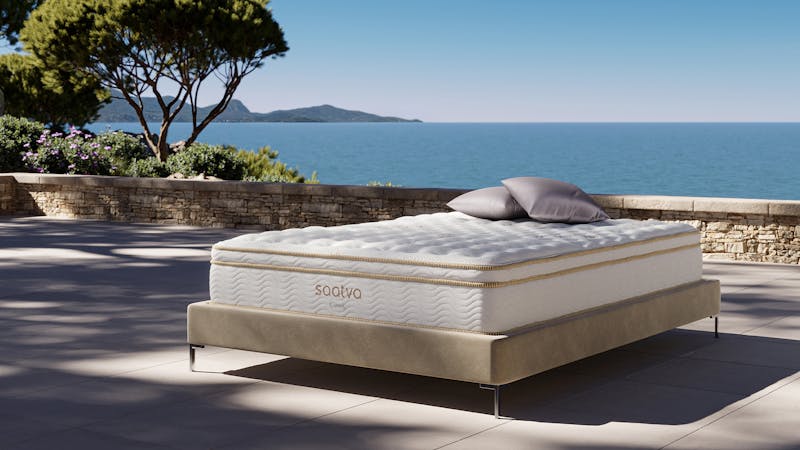
Available in queen through split king, with all sizes maintaining the same lumbar support zone and edge support characteristics. The queen offers a Luxury Firm feel that works for most couples. The king provides the thermal buffer and space benefits described above. For couples considering split king, Saatva's dual-coil construction is available in per-mattress configurations that work in a king frame with a bridge.
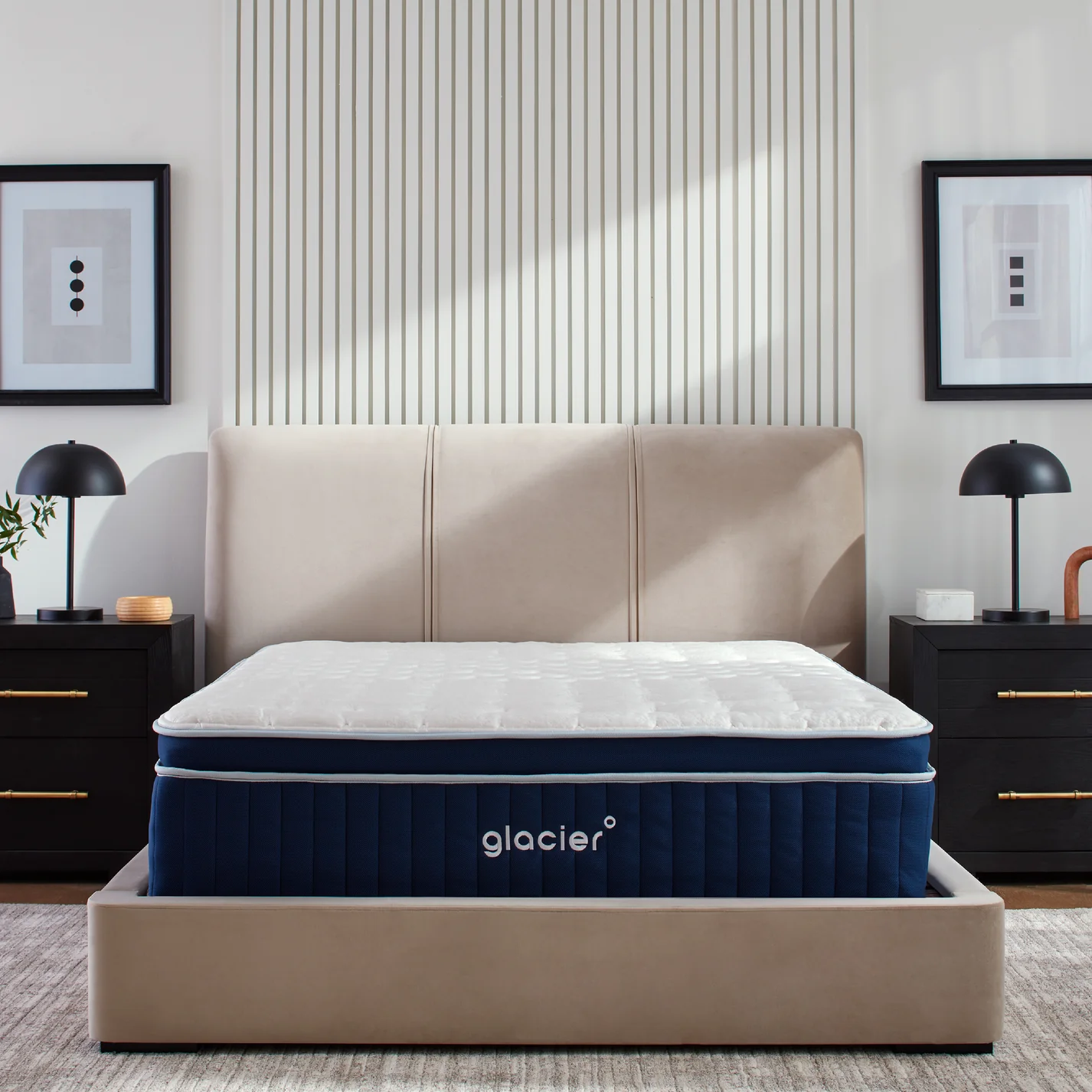
Available in standard queen and king. The pocketed coil hybrid performs well in both sizes, with the king benefiting from the additional center-of-bed damping distance for motion isolation. The cashmere euro top provides enough surface softness to satisfy most sleep positions without requiring a softer mattress.
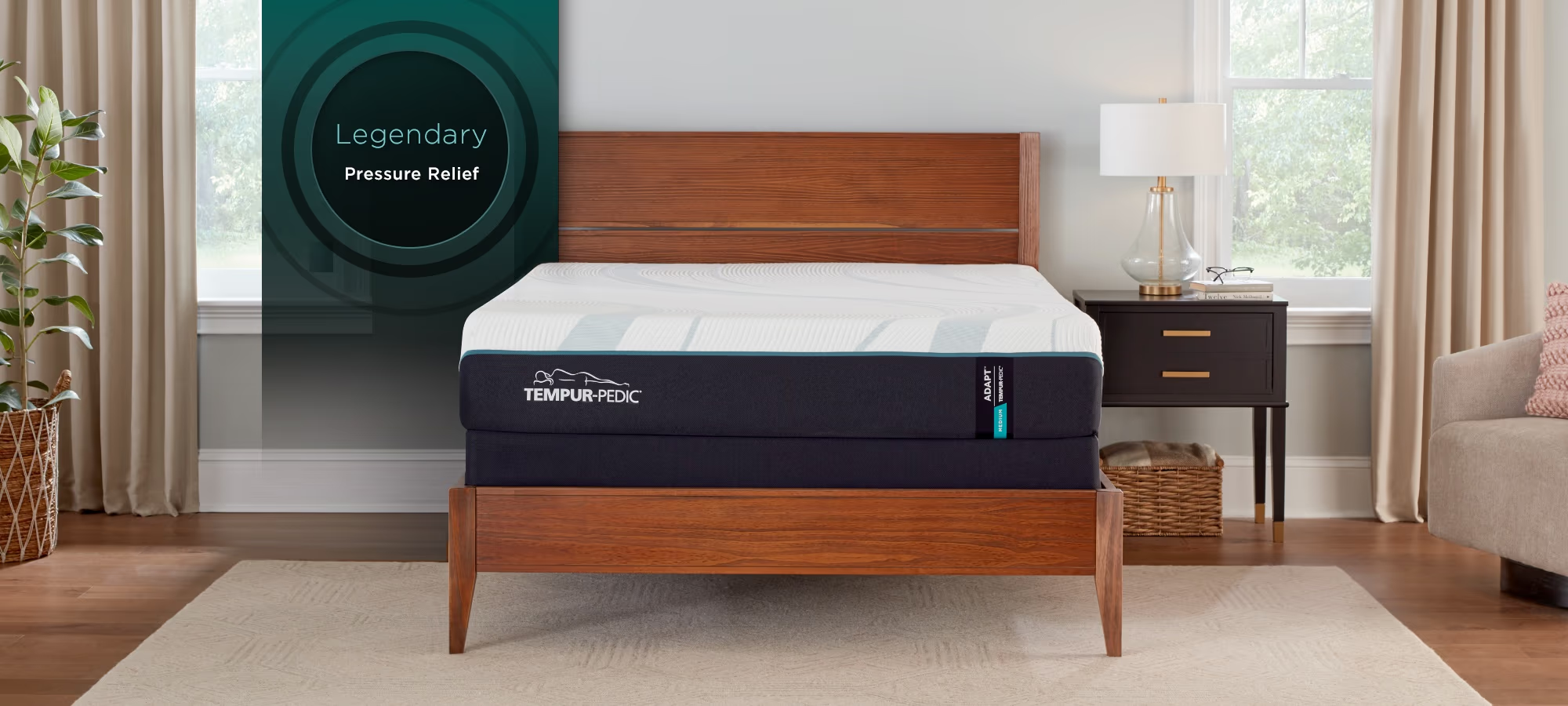
The Midnight Luxe is available in a split king configuration as the Helix Midnight Luxe (per-side), which is one of the few direct-to-consumer options where both partners can order their own firmness in the same family of mattress. This makes it an option for couples who want independent firmness at a lower price point than the premium TEMPUR split king approach.
Related Reading
Full ranked list
Best Mattress for Couples
See every mattress we tested for couples, ranked by performance score.
Top Picks for Couples
See full list →Ranked by test data
Not sure which mattress is right for you?
Take our 60-second quiz and we'll match you with the best options for your sleep style and budget.
Take the Free Quiz →