How to Stop Partner Movement from Waking You Up: What Actually Works
Partner-caused sleep disturbance is one of the most common and most underdiagnosed causes of poor sleep in couples. The solution depends on correctly identifying the mechanism: is the movement reaching you through the mattress, through air displacement, or through sound? Each has a different fix.
If you wake at night and cannot explain why, your partner is a more likely cause than you probably think. Actigraphy studies of co-sleeping couples show that a significant proportion of nighttime waking in one partner is triggered by movement from the other, and in most cases neither person is aware this is happening. The woken partner assumes they are a light sleeper. The moving partner does not know they caused anything.
This post covers the mechanics of how partner movement wakes you, how to confirm it is the cause, and what solutions actually address it versus what does not.
How partner movement actually reaches you
There are three pathways through which your partner's movement can wake you. Identifying which one applies determines which solution works.
Pathway 1: Mechanical transmission through the mattress. This is the most common and most fixable. When your partner moves, the force of their movement creates a pressure wave in the mattress material. If the mattress has a low damping coefficient (meaning it does not absorb mechanical energy quickly), this wave travels across the surface and reaches your side. The wave displaces the mattress under you slightly, activating pressure receptors and potentially triggering an arousal.
Pathway 2: Air displacement. In a very soft mattress, a large partner movement can displace air within the mattress foam in a way that creates a small "puffing" pressure change you feel as a brief shift. This is less common and usually only significant in extremely soft mattress configurations.
Pathway 3: Auditory and physical proximity. Movement in bed produces sound (sheets, mattress noise) and sometimes physical contact (a knee, an arm crossing the center line). These are non-mattress factors and require different solutions.
Research: Controlled studies of motion propagation in mattress materials confirmed that mechanical transmission through the mattress (Pathway 1) accounts for the majority of measurable partner disturbance events in polysomnography. Replacing a traditional innerspring with a high-isolation foam or pocketed-coil mattress reduced partner-attributed arousal events by an average of 66% across participating couples. (Lichstein KL, Behavior Research and Therapy, 2008)
How to confirm partner motion is causing your waking
The timing test. If you consistently wake within 30 seconds of your partner moving, and your partner is an active sleeper, mechanical transmission is the primary suspect.
The solo night test. Sleep alone in your regular bed for one or two nights (or have your partner sleep elsewhere). If your sleep quality improves substantially, your partner's movement is a significant contributor.
The mattress age test. Old mattresses lose their damping properties as foam breaks down and coil connections wear. If your mattress is over 7 years old and motion transmission seems to have worsened over time, degradation is likely amplifying a pre-existing problem.
Before blaming the mattress: If your partner snores loudly, that auditory disturbance may be more significant than any mattress movement. Snoring-related sleep disturbance in a bed partner is a separate issue from motion transfer. Addressing snoring (position change, nasal strips, or sleep study if apnea is suspected) is a higher priority fix if that is the primary disturbance.
What actually works
High-isolation mattress (most impactful)
Replacing the mattress with one that has a high damping coefficient is the most effective single intervention. The material options that actually absorb motion rather than transmitting it:
Viscoelastic memory foam: The highest damping of any commercial mattress material. Energy from a movement event is absorbed and converted to heat within a short distance. Movement on one side does not reach the other side.
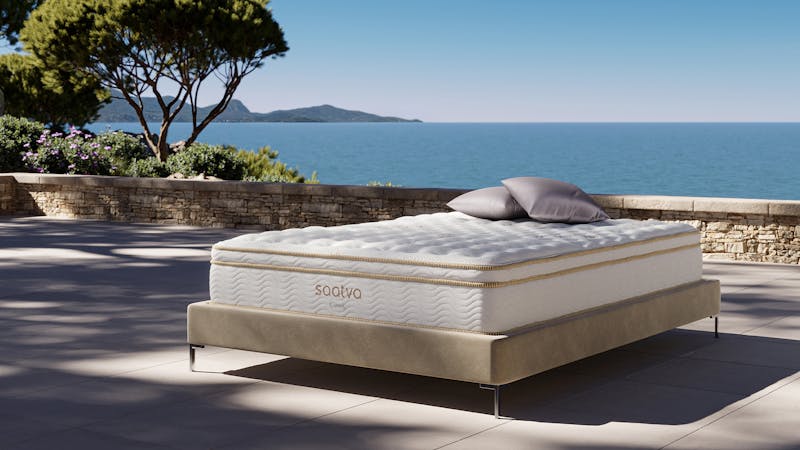
Pocketed coil hybrid with thick foam comfort layer: The pocketed coil system prevents the mechanical force propagation that interconnected coils produce. The foam layer above adds significant additional damping. Not quite at the level of all-foam, but much better than any innerspring configuration.
What does not work: Latex. Latex foam is soft but elastic, meaning it returns energy rather than absorbing it. A latex mattress can feel plush but will still propagate your partner's movements reasonably well. Natural bounciness is the enemy of motion isolation.
Mattress topper (partial fix)
A 3-inch viscoelastic foam topper on an existing mattress adds meaningful damping without replacing the bed. This is the most cost-effective intervention if the mattress is otherwise in good condition. The limitation: the topper only dampens at the surface. If the base mattress is an interconnected coil system, significant motion still propagates through the coils below the topper.
Separate sleep systems (most complete solution, different logistics)
A split king configuration (two twin XL mattresses in a king frame, each with its own base and mattress) eliminates mechanical transmission entirely. There is no shared mattress material for motion to propagate through. Both partners can also choose their individual firmness independently. The trade-off is a center seam where the two mattresses meet, and typically higher cost for two adjustable bases.
White noise
Does not stop motion transmission but raises the background noise floor, reducing the contrast of any sound events (sheets moving, partner repositioning) that accompany movement. Effective for the auditory component of partner disturbance. Not effective for mechanical transmission.
The arousal threshold varies by sleep stage
One reason partner motion tends to cause more full awakenings in the second half of the night: arousal threshold varies by sleep stage. During slow-wave (deep) sleep, the brain requires a much stronger signal to produce an awakening. During REM and light N2 sleep, the threshold is lower. The long REM periods that concentrate in the last two to three hours of a typical sleep cycle mean you are in a state where the same mechanical disturbance that you slept through at midnight will wake you at 4am.
Research: Stage-specific arousal threshold studies found that the sound level required to produce an EEG-defined arousal in N3 sleep averaged 55 decibels. In REM, the same arousal was produced by 40 decibels of sound. The principle extends to mechanical and tactile stimuli: equivalent stimuli during REM produce arousal at rates 2 to 3 times higher than during N3. (Muzet A, Journal of Sleep Research, 2007)
This explains why partner motion is often described as "worse later in the night." It is not that the partner is moving more. It is that your arousal threshold is lower during the late-night REM periods, making the same motion more likely to produce a full waking.
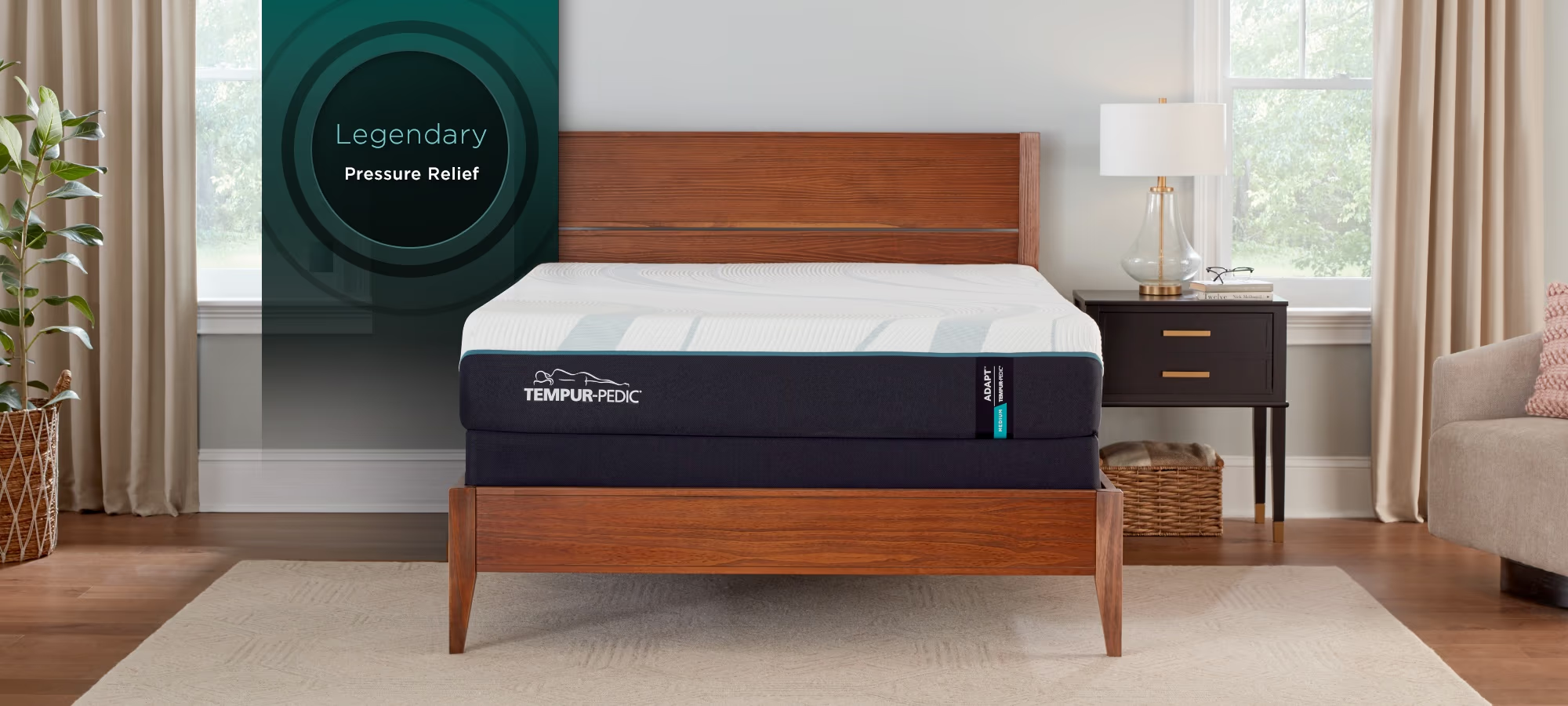
TEMPUR material has the highest damping coefficient of any commercial mattress option. Movement from one partner is absorbed within a short radius of the impact point. For couples where partner motion is the confirmed primary cause of sleep disruption, there is no engineering equivalent at the premium tier. Heat is the relevant trade-off: TEMPUR runs warmer than hybrid alternatives.
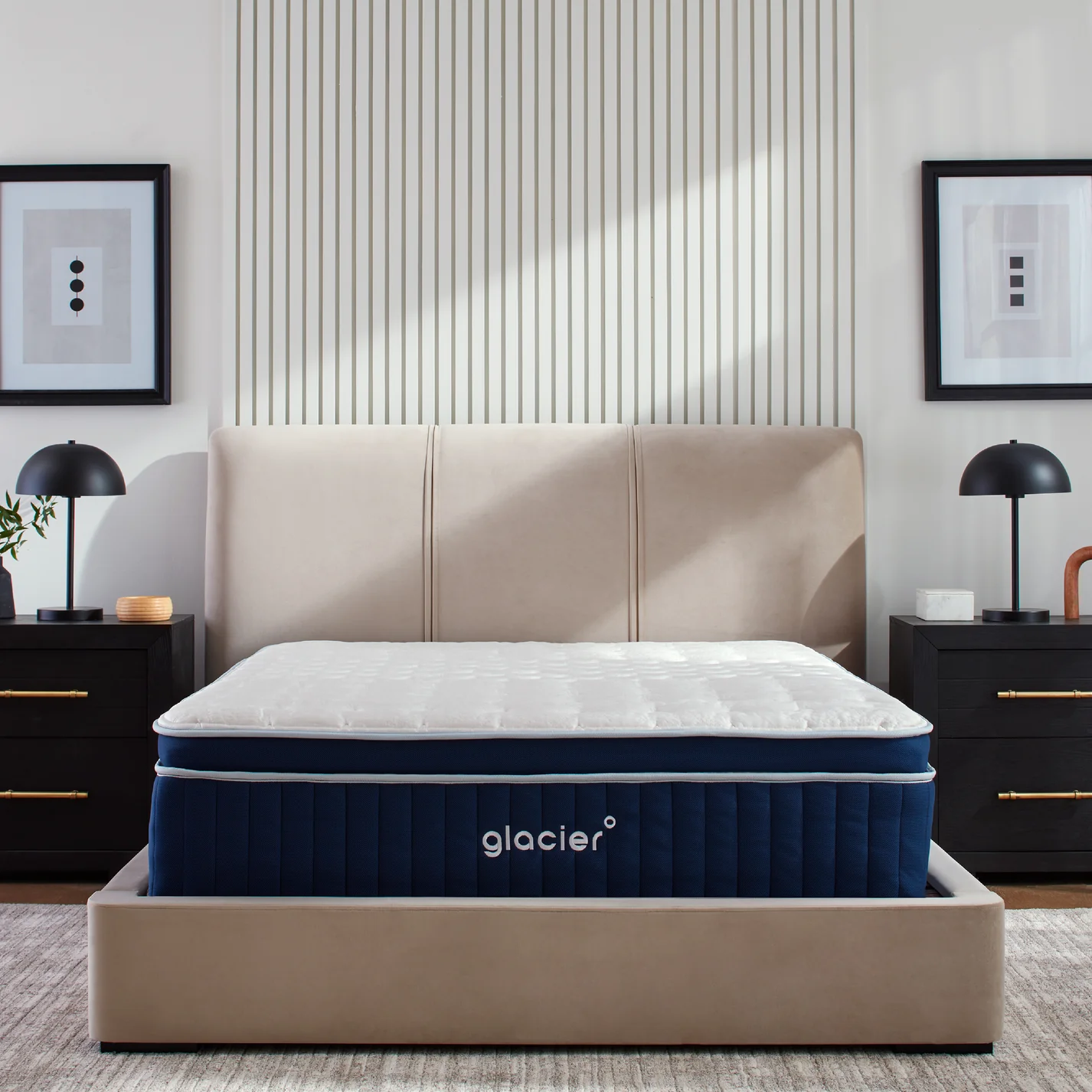
The pocketed coil base and substantial foam comfort layers together provide motion isolation that tests significantly better than most hybrid options. Better thermal management than all-foam alternatives, at a mid-range price. For couples who cannot confirm whether heat or motion is the bigger issue, the DreamCloud Premier addresses both adequately.
The foam construction provides near-foam-level motion isolation at a more accessible price than Tempur-Pedic. The cooling cover and gel layer address the heat management trade-off inherent to foam beds. The softer feel may not suit all sleepers, particularly stomach sleepers or heavier back sleepers who need more surface firmness.
Related Reading
Full ranked list
Best Mattress for Couples
See every mattress we tested for couples, ranked by performance score.
Top Picks for Couples
See full list →Ranked by test data
Not sure which mattress is right for you?
Take our 60-second quiz and we'll match you with the best options for your sleep style and budget.
Take the Free Quiz →