#1
$2,198
$1,049
Save 52%
Queen size
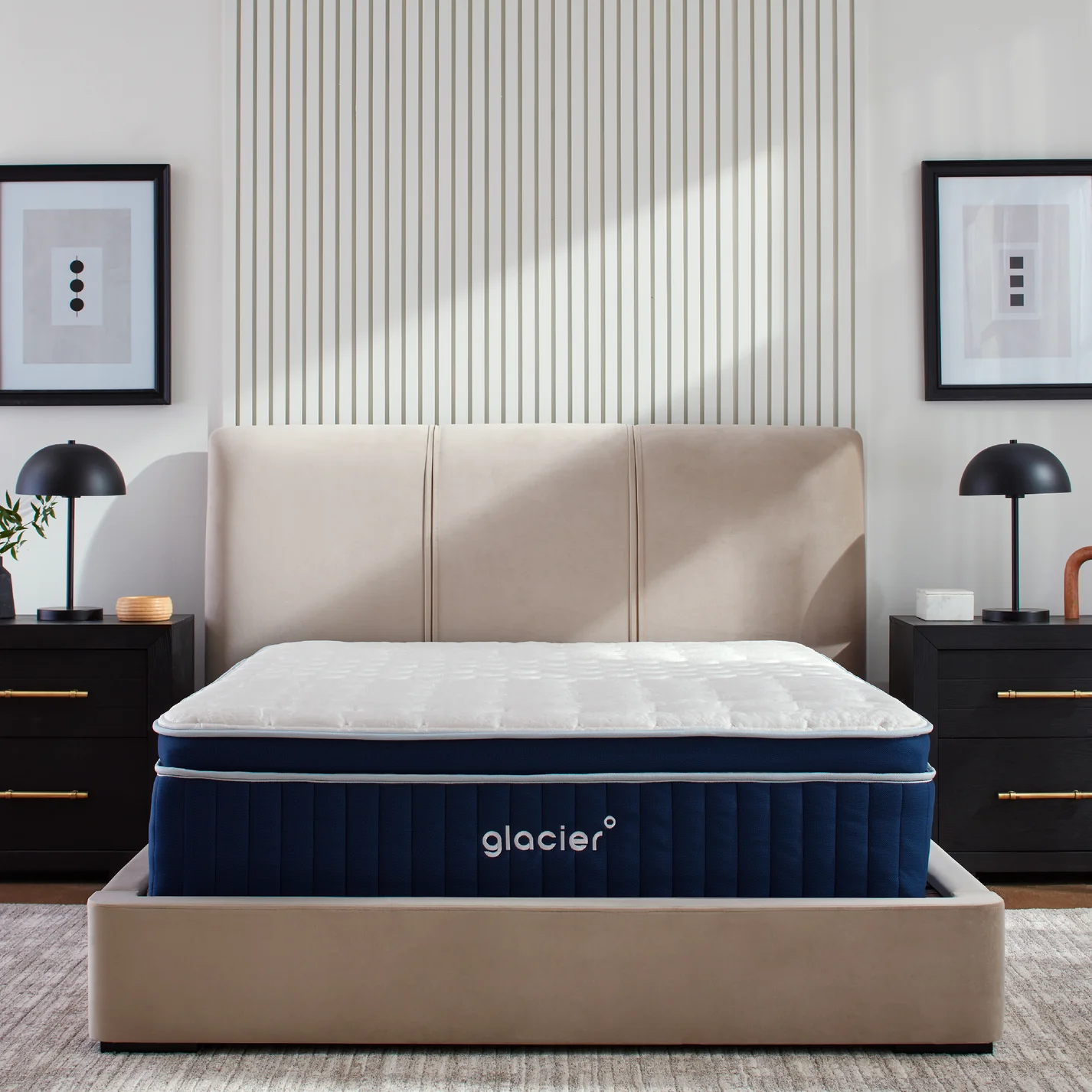
- ✓Best-in-class cooling with glacierTECH® Elite + copper + graphite layers
- ✓365-night sleep trial with lifetime warranty
Comfort 9.2/10Support 8.8/10Cooling 9.8/10
365-night trial
Memorial Day Sale — Save up to $400 on top-rated mattresses
Glacier code QUIZZZ50 takes $50 off. Limited-time prices on our top picks.
Updated April 2026
Sharing a mattress means optimizing for two body weights, two sleep positions, and (often) two different temperature preferences. The picks below were tested for motion isolation, edge support, and how well they handle the firmness compromise that most couples face when one partner is significantly lighter or heavier than the other.
60-Second Quiz · Free
Not sure if a couple mattress is right for you?
Answer 6 questions and we'll match you to the right pick for your sleep style and budget.
About 60 percent of adults share a bed, and partner disturbance is the single most common sleep complaint among couples. The two clinically significant disturbances are motion transfer (one partner's movement waking the other) and thermal transfer (body heat from one partner warming the other). Mattress choice has the largest impact on the first and a meaningful impact on the second.
The harder problem is firmness. When two adults have different body weights or sleep positions, a single mattress firmness will not be optimal for both. The fix is either a hybrid that performs well across a wider firmness range (which most premium hybrids do) or a split-king setup with two different firmness levels — the only configuration that genuinely solves the dual-firmness problem. The picks below cover both approaches.
Tested specifications that matter
When one partner shifts, the displacement felt on the other side of the bed should be under 4 cm. This is measured by dropping a standardized weight on one side and measuring vertical displacement at a fixed distance on the opposite side. Memory foam and hybrid mattresses with thick comfort layers consistently meet this; innerspring beds with continuous-coil systems often do not.
Couples typically use the full width of the mattress, often sleeping closer to the edge. Weak edge support compresses asymmetrically when the partner sits down to put on shoes or get into bed, transmitting motion across the bed. Look for edge compression under 2 inches under standardized load — most premium hybrids deliver this.
If one partner is under 150 lbs and the other is over 200 lbs, a single firmness will not perform optimally for both. Pocketed coil hybrids handle this better than foam-only beds because the coil compression scales with applied weight — each side responds correctly to its sleeper. Continuous-coil innerspring beds and very deep memory foam are worst at this.
Body heat compounds in shared beds. The partner who runs warm naturally is the constraint on shared bed thermal comfort. Hybrid construction, breathable covers, and avoidance of deep-contour memory foam are the relevant specs. Prioritize cooling specs based on the warmer partner, not the cooler one.
A queen mattress provides 30 inches per person — narrower than a standard adult shoulder span, which is why couples on queen beds often feel cramped after a few months. A king provides 38 inches per person and is the right pick if budget and bedroom size allow. California king is taller but narrower per person, so it is better for two tall sleepers, not for couples generally.
Couples often need 60–90 nights to evaluate whether motion isolation, firmness compromise, and partner thermal transfer are actually working in their specific case. Trial periods of 100 nights are the floor; 365-night trials (Saatva, Nectar, DreamCloud) give a full year to evaluate.
Research
Partner-disturbance accounts for 41 percent of arousal events in shared-bed sleep studies. Motion isolation in mattress construction can reduce these arousal events by 60–80 percent compared to high-transfer surfaces.
— Sleep Health Journal — Co-sleeping Disturbance Patterns, 2020
Ranked by performance score
$2,198
$1,049
Save 52%
Queen size
$2,179
Queen size
Why this for couples
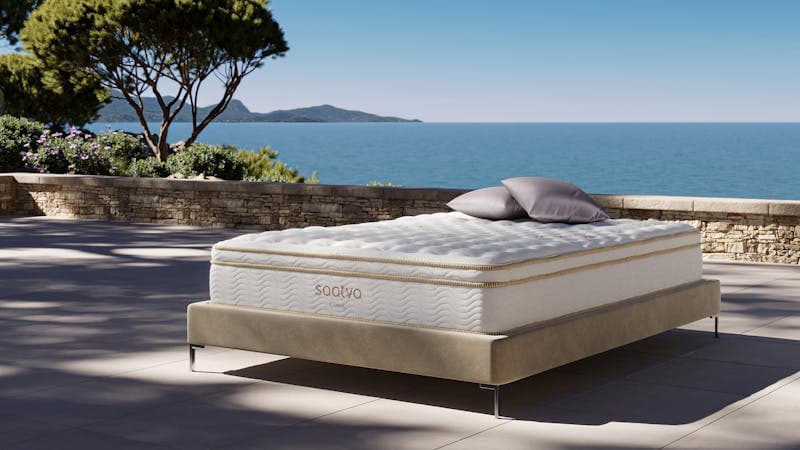
The strongest pick for couples across body types. Dual-coil hybrid construction handles different body weights on each side better than single-coil or foam alternatives. Edge support is among the best in our test group. Three firmness options accommodate partner preferences. Lifetime warranty and white-glove delivery (which removes the strain of moving an old mattress with a partner).
$2,199
Queen size
Why this for couples
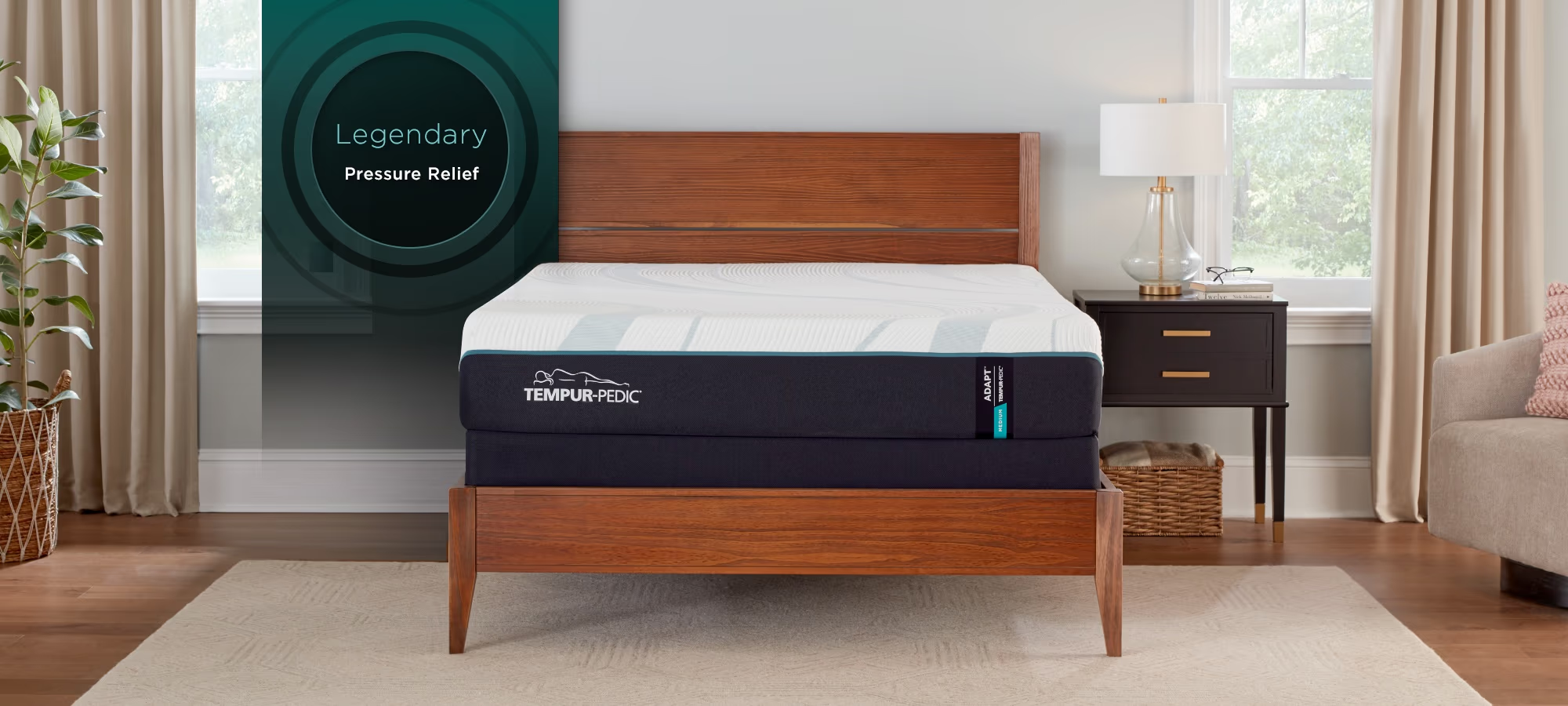
The strongest motion isolation in our test group at 1.4 cm displacement — meaningfully better than the 3.2 cm industry average. Best for couples where one partner is a significantly more sensitive sleeper. The tradeoff is responsiveness — combination sleepers may find rolling more effortful than with a hybrid.
$1,299
$949
Save 27%
Queen size
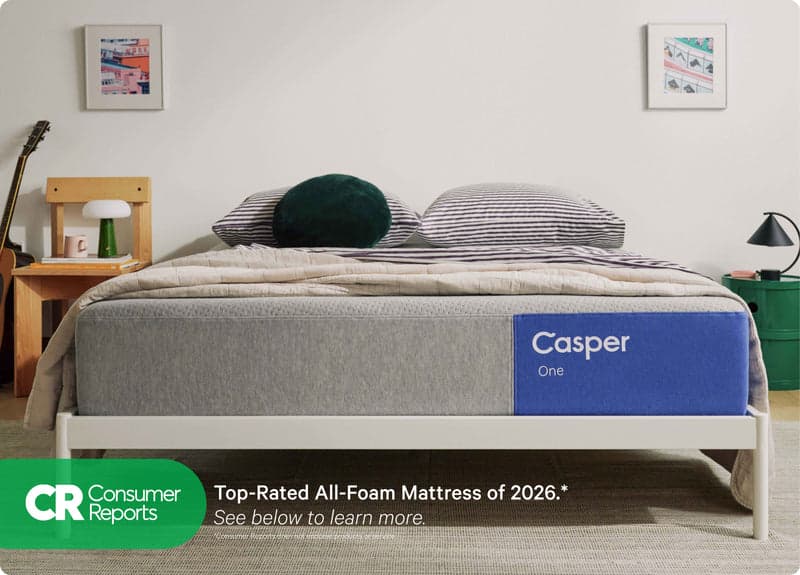
$749
$599
Save 20%
Queen size

$1,374
$1,099
Save 20%
Queen size
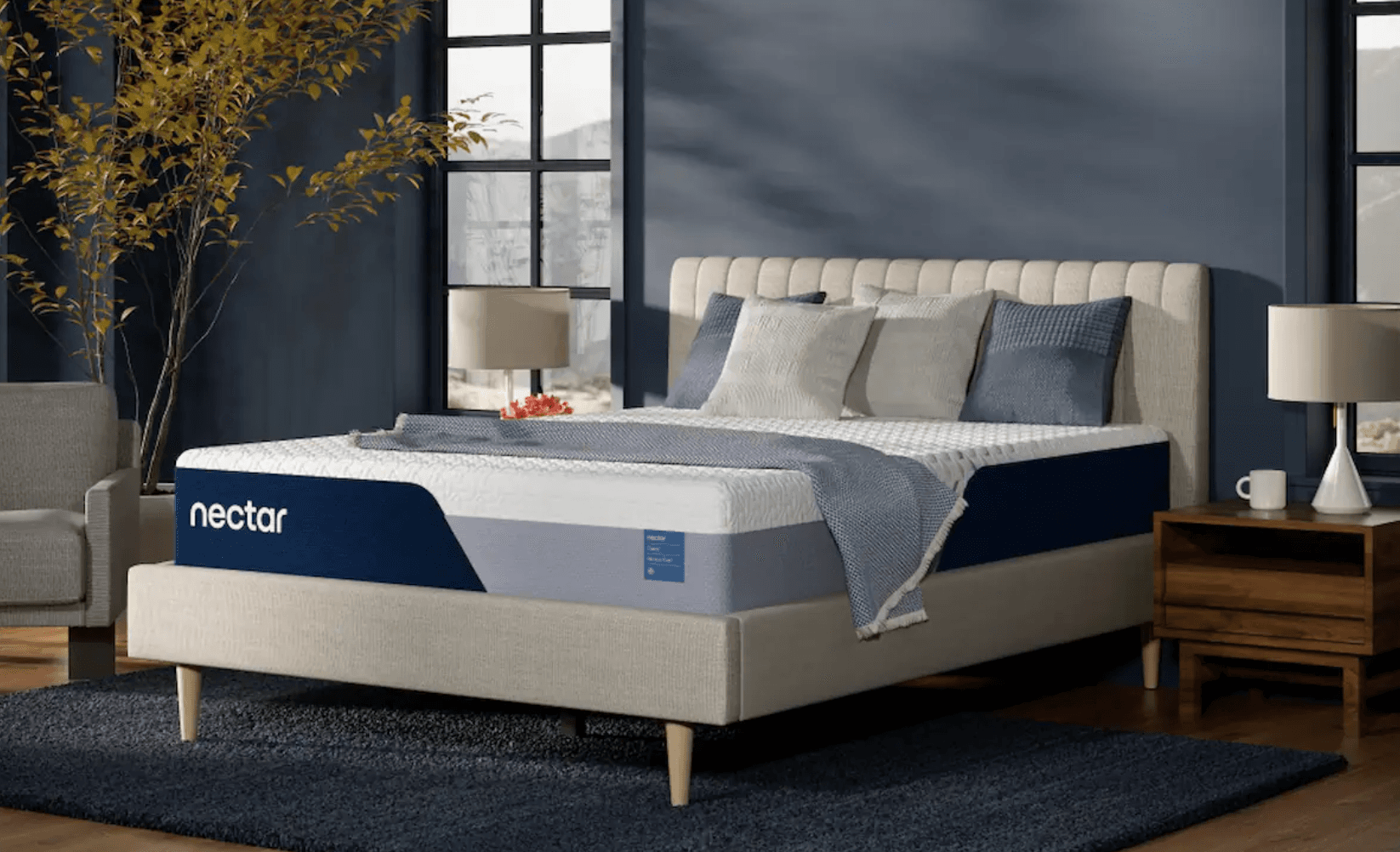
$1,049
$689
Save 34%
Queen size
Still deciding?
Our quiz factors in sleep position, body type, partner, and budget — then matches you to the right mattress from our 13+ tested picks.
Free · No signup · 60 seconds