How Your Sleep Environment Affects Stress Levels: The Physiology Behind Your Bedroom
Your bedroom is not just a backdrop for sleep. It is an active participant in the neurochemical process that either allows stress hormones to clear overnight or keeps them elevated into the next day. The specific mechanisms involve cortisol, the autonomic nervous system, and the quality of deep sleep your environment permits.
Stress and sleep are linked in both directions. Stress disrupts sleep. Poor sleep amplifies stress reactivity the following day. But there is a third element in this loop that is less often discussed: the sleep environment itself can either support or obstruct the overnight neurochemical processes that allow the brain to recover from a stressful day.
Your bedroom is not a neutral space. It is an environment with measurable physiological effects on your autonomic nervous system, your cortisol rhythm, and the depth of sleep your brain is able to reach. Understanding these effects gives you specific, targetable variables rather than the vague advice to "create a relaxing space."
How the stress response resets during sleep
The HPA axis (hypothalamic-pituitary-adrenal axis) is the hormonal system that drives the stress response. When you encounter a stressor, the hypothalamus signals the pituitary, which signals the adrenal glands to release cortisol. Cortisol prepares the body to respond: it raises blood glucose, suppresses non-essential functions like digestion and immune activity, and heightens sensory alertness.
Under normal circumstances, cortisol levels are highest in the 30 to 45 minutes after waking (the cortisol awakening response), then decline steadily through the day, reaching their lowest point in the hours around midnight. This is the window when the body is meant to perform HPA axis downregulation: clearing the cortisol that accumulated during the day and resetting the system for the next morning.
This clearing process is concentrated in deep sleep. During N3 (slow-wave sleep), growth hormone release peaks, cortisol reaches its daily nadir, and the inflammatory markers that accompany chronic stress are suppressed.
Research: Sleep deprivation studies showed that even partial sleep restriction of 4 hours per night over 6 days produced cortisol levels in the evening that were 37% higher than baseline. The effect accumulated across days and did not fully normalize until subjects were allowed extended recovery sleep. The mechanism was specifically impaired HPA axis downregulation during reduced slow-wave sleep time. (Leproult R, Sleep, 1997)
If the sleep environment is disrupting N3 sleep, the overnight cortisol clearance process is incomplete. You begin the next day with a higher baseline cortisol level, which means a lower threshold for stress reactivity and a faster ramp to feeling overwhelmed by the same stressors that would be manageable on a well-rested day.
The cascade in plain terms: A warm, noisy, uncomfortable bedroom reduces deep sleep duration. Reduced deep sleep impairs HPA axis downregulation. Impaired downregulation means higher cortisol into the next day. Higher cortisol means lower stress tolerance. Lower stress tolerance means the next night is harder to initiate. This loop compounds over days and weeks of poor sleep hygiene.
The specific variables and their mechanisms
Temperature
The body initiates sleep partly through core temperature reduction, achieved by routing blood to the hands and feet for peripheral heat radiation. A bedroom that is too warm or a mattress that traps body heat prevents this cooling process. The result is longer sleep onset, reduced deep sleep, and more frequent nighttime arousals.
The recommended range is 65 to 68 degrees Fahrenheit. Below 60, the body diverts resources to maintaining core temperature. Above 72, peripheral cooling is insufficient to produce the required core temperature drop.
Research: Studies using temperature-controlled sleep environments found that ambient temperatures outside the 60 to 72 degree range produced significant reductions in slow-wave sleep duration and increases in WASO. Temperature was identified as the single environmental variable with the largest independent effect on sleep architecture in temperature-manipulation studies. (Okamoto-Mizuno K, Journal of Physiological Anthropology, 2012)
Noise
The auditory system remains partially active during sleep and does not fully habituate to intermittent noise. Each significant sound event above approximately 35 decibels (roughly a quiet conversation) can produce an EEG arousal response, even if it does not result in full waking. These micro-arousals fragment sleep architecture without producing memories of waking.
Continuous low-level noise, such as white or pink noise, reduces the contrast between background and noise events, making the auditory system less reactive to intermittent disturbances. This is why white noise can improve sleep in noisy environments.
Light
The suprachiasmatic nucleus, your body's circadian clock, uses light to set its 24-hour timer. Blue-spectrum light suppresses melatonin synthesis and delays the circadian signal that initiates the evening cortisol decline and sleepiness cascade. Even low-level light exposure (around 10 lux, similar to a dim bedside lamp) at night can measurably suppress melatonin in sensitive individuals.
The phone issue is real but often framed wrong: Screen light at night suppresses melatonin, yes. But the more significant mechanism for anxious sleepers is cognitive: checking email, news, or social media before bed activates the prefrontal cortex and the threat-detection systems that need to quiet down for sleep to begin. The cognitive activation compounds the melatonin suppression.
The mattress as a sleep environment variable
The mattress determines two things relevant to stress physiology: whether deep sleep is achievable, and whether the body spends the night in a state of low-grade physical stress.
A mattress that creates pressure peaks at the hip and shoulder fires continuous repositioning signals throughout the night. In light sleep (N1 and N2), the body responds with micro-movements. In deep sleep, these signals compete with the slow-wave EEG patterns required for cortisol clearance. This is the most direct mechanism connecting mattress quality to HPA axis function.
A mattress that retains heat adds a thermal stressor to this picture. The combined effect of pressure and heat on a night's sleep architecture is cumulative: more time spent in light sleep, less time in deep sleep, and more frequent arousals that reset the descent into slow-wave.
Research: A controlled trial comparing sleep on participants' current mattresses (average 9.4 years old) versus new medium-firm models found significant reductions in back pain, shoulder pain, and stress on the new mattresses, with objective sleep efficiency improvements averaging 12 minutes per night. Perceived stress, measured by validated questionnaire, decreased significantly over the 28-day trial. (Jacobson BH, Journal of Chiropractic Medicine, 2009)
Three picks for supporting overnight stress recovery
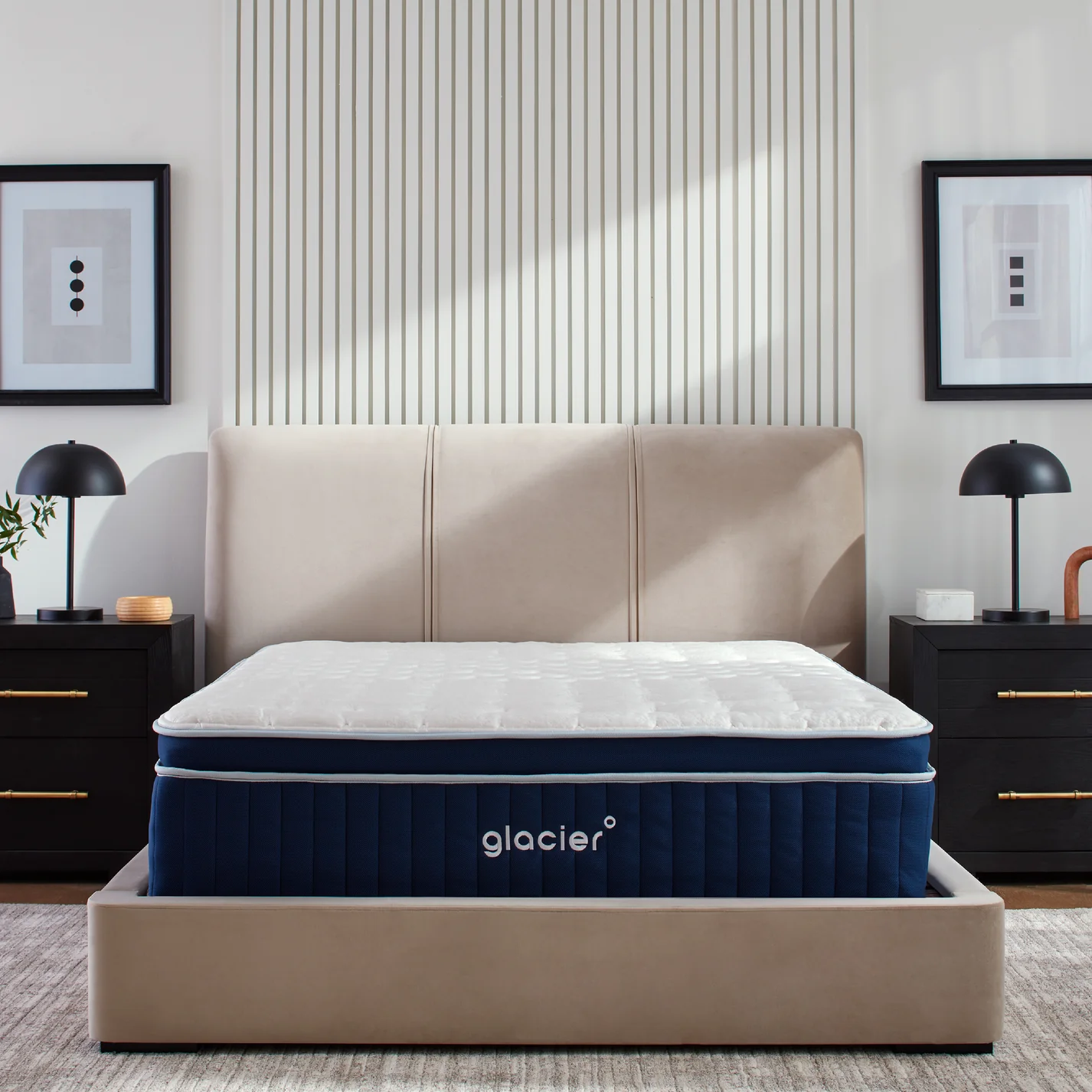
The dual-coil construction provides natural ventilation that keeps surface temperature lower than foam alternatives, directly addressing the thermal component. The lumbar support zone reduces the postural stress that fires repositioning signals during deep sleep. Available in Luxury Firm for most sleepers or Plush Soft for side sleepers who need more shoulder give. Strong edge support means getting in and out of bed at night without a partner disturbance.
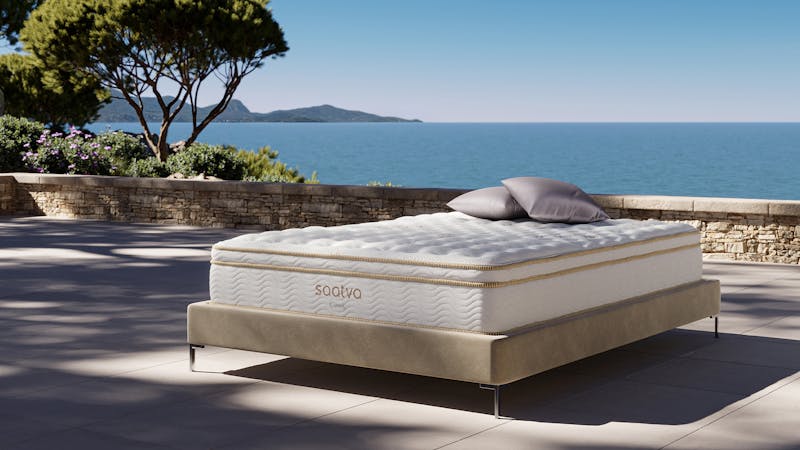
Natural Dunlop latex over pocketed coils provides a thermally neutral surface (latex does not trap heat the way synthetic foam does), responsive pressure relief, and a material provenance that removes concerns about off-gassing, which some stress-sensitive sleepers find activating. GOLS-certified latex and GOTS-certified organic cotton cover. The firmness is on the medium-firm to firm end; choose the optional pillow top if you are a side sleeper needing more shoulder cushioning.
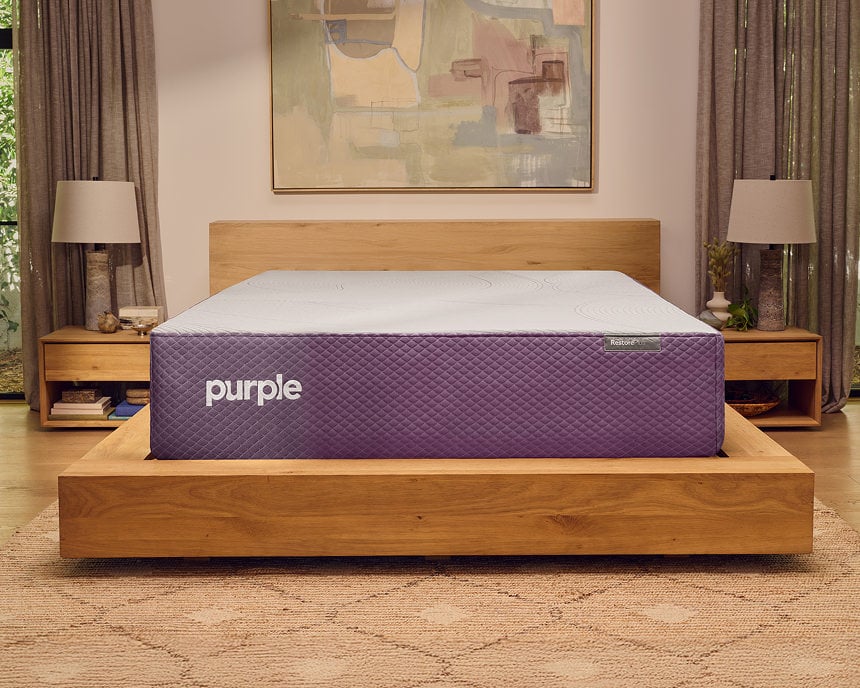
The pocketed coil system with cashmere euro top handles all three relevant variables at a mid-range price: cooler than foam, good pressure distribution for most sleep positions, and enough motion isolation to prevent partner disturbances from adding to the noise burden. A consistent performer for stress-related sleep concerns without optimizing for a single variable at the expense of others.
Related Reading
Full ranked list
Best Mattress for Couples
See every mattress we tested for couples, ranked by performance score.
Top Picks for Hot Sleepers
See full list →Ranked by test data
Not sure which mattress is right for you?
Take our 60-second quiz and we'll match you with the best options for your sleep style and budget.
Take the Free Quiz →