Can Your Bed Affect Cortisol Levels? Sleep Science and Your Stress Hormones
Cortisol follows a strict 24-hour rhythm that depends heavily on sleep quality to complete its overnight reset. A bed that fragments deep sleep or adds physical stressors disrupts this reset, producing measurably higher cortisol the next day and compounding the stress response over time.
Cortisol is your body's primary stress hormone. It follows a precise 24-hour rhythm: lowest around midnight, rising steeply in the early morning to peak 30 to 45 minutes after waking, then declining through the day. This rhythm is not just a measurement artifact. It is the body's active schedule for stress preparation and recovery.
The overnight portion of that cycle, when cortisol reaches its daily nadir and the HPA axis resets, is entirely dependent on sleep quality. Specifically, on the amount and depth of slow-wave (N3) sleep you get. A bed that prevents this sleep does not just leave you tired. It measurably disrupts cortisol regulation in ways that compound across days.
The cortisol awakening response and what it tells you
The cortisol awakening response (CAR) is a diagnostic marker in stress physiology research. Within 30 to 45 minutes of waking, cortisol rises sharply, typically by 50 to 100% above the pre-waking baseline. This response is the body's preparation signal for the demands of the day ahead: it mobilizes glucose, sharpens alertness, and primes the immune system.
The size of the CAR on a given morning is influenced by several factors, including perceived stress, work demands anticipated that day, and critically, sleep quality the night before.
Research: Studies measuring salivary cortisol in participants across varying sleep conditions found that nights with more sleep fragmentation and reduced slow-wave sleep were followed by significantly higher CAR the following morning. The relationship was specific to sleep quality, not total sleep time: participants who logged 7 hours of fragmented sleep showed higher CARs than those who logged 6 hours of consolidated sleep. (Pruessner JC, Psychoneuroendocrinology, 1997)
This finding has a practical implication: the quality of sleep your bed permits, not just the quantity of hours spent in it, determines what your cortisol looks like when you wake up.
What a high CAR feels like: The cortisol awakening response itself is not always uncomfortable. Many people describe waking with a sense of immediate alertness, sometimes anxiety, and heart rate that feels elevated for the first hour of the day. If this describes your mornings, and particularly if it correlates with nights of disrupted sleep, the CAR is likely a contributor.
How the bed affects cortisol directly
The connection between your bed and your cortisol levels runs through two mechanisms.
Mechanism 1: Physical stressors during sleep.
A bed that creates pressure peaks at the hip and shoulder, retains heat, or transmits partner motion does not just disrupt sleep architecture. It introduces low-grade physical stressors throughout the night. The body responds to physical stressors with cortisol release, even during sleep and even from stimuli below the level of consciousness.
Research: Studies of nocturnal cortisol in subjects with chronic pain found significantly elevated cortisol across the sleep period compared to pain-free controls, with the greatest difference during the early sleep period when N3 typically dominates. This confirmed that physical discomfort during sleep produces a cortisol signal independent of conscious awareness. (Onen SH, Pain, 2001)
A bed that creates chronic low-grade pressure at bony prominences is doing something functionally similar to a mild pain stressor throughout the night. The cortisol response is smaller than in chronic pain, but the mechanism is the same.
Mechanism 2: Disruption of deep sleep and HPA downregulation.
The overnight clearance of cortisol is concentrated in slow-wave sleep. During N3, growth hormone surges (partially antagonizing cortisol), the HPA axis reduces its activity, and inflammatory markers fall. This is the primary recovery mechanism the body has for chronic stress.
A bed that fragments sleep reduces the proportion of time spent in N3. Each arousal event resets the descent: after an awakening, the brain cycles back through N1 and N2 before reaching N3 again, and depending on the timing and frequency of arousals, deep sleep time can be significantly curtailed even when total sleep time is adequate.
Research: In experimental sleep fragmentation studies where participants were woken repeatedly without reducing total sleep time, the following day showed significantly elevated cortisol, increased inflammatory markers, and self-reported stress levels comparable to those seen in partial sleep deprivation studies. The mechanism was identified as impaired HPA downregulation during disrupted slow-wave sleep. (Mullington JM, Best Practice and Research Clinical Endocrinology and Metabolism, 2010)
Common misconception: "I got 8 hours, so I should feel fine." Total time in bed is not the same as restorative sleep. Eight hours of fragmented sleep produces higher morning cortisol than six hours of consolidated sleep. The metric that determines cortisol recovery is N3 duration and continuity, not hours logged.
The feedback loop
Elevated cortisol from poor sleep creates a self-reinforcing cycle. Cortisol is a stimulating hormone. When it is elevated past its normal evening nadir, it directly competes with melatonin and the parasympathetic shift required for sleep onset. This is why chronic stress frequently presents with both difficulty falling asleep (cortisol delaying sleep onset) and early waking (cortisol rising too early in the morning rhythm).
Cortisol Rhythm: Normal vs. After Disrupted Sleep
After disrupted sleep, cortisol does not reach the same overnight nadir. The result is higher baseline cortisol throughout the following day and a higher cortisol awakening response on waking.
What the bed can and cannot do
It is worth being precise about the scope of this effect. A mattress upgrade will not treat anxiety disorder, normalize a dysregulated HPA axis, or substitute for psychological intervention in clinical stress. What it can do:
Remove a chronic low-grade physical stressor that produces a cortisol signal during sleep, on top of whatever psychological stressors you are already carrying.
Protect N3 sleep by eliminating pressure and heat-related awakenings that fragment sleep architecture and reduce the time available for HPA downregulation.
Break one link in the feedback loop between poor sleep and elevated next-day stress reactivity, which may be enough to interrupt the compounding effect over time.
Research: In the 28-day mattress replacement trial, participants sleeping on new medium-firm beds reported not just improved back pain and sleep quality but also lower stress scores on validated measures, independent of other lifestyle changes. The correlation between sleep efficiency improvement and stress reduction was significant. (Jacobson BH, Journal of Chiropractic Medicine, 2009)
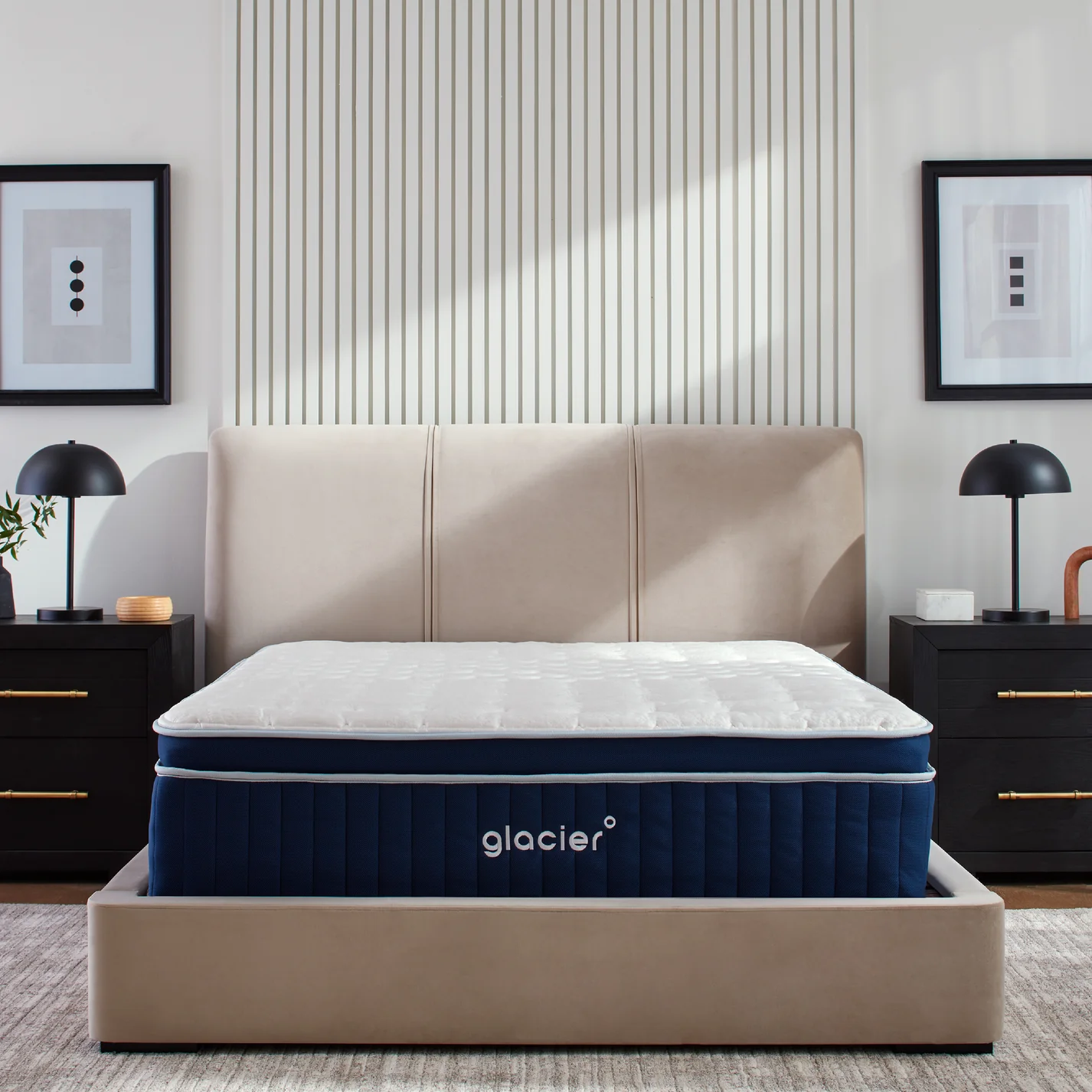
Zoned pocketed coils provide targeted pressure relief at the shoulder and hip (where physical stressors concentrate in side sleeping) while maintaining lumbar support that prevents postural cortisol triggers. The coil system prevents heat buildup. For anxious sleepers who also run warm, this is the most complete package: pressure relief, thermal neutrality, and motion isolation without needing to compromise on any of the three.
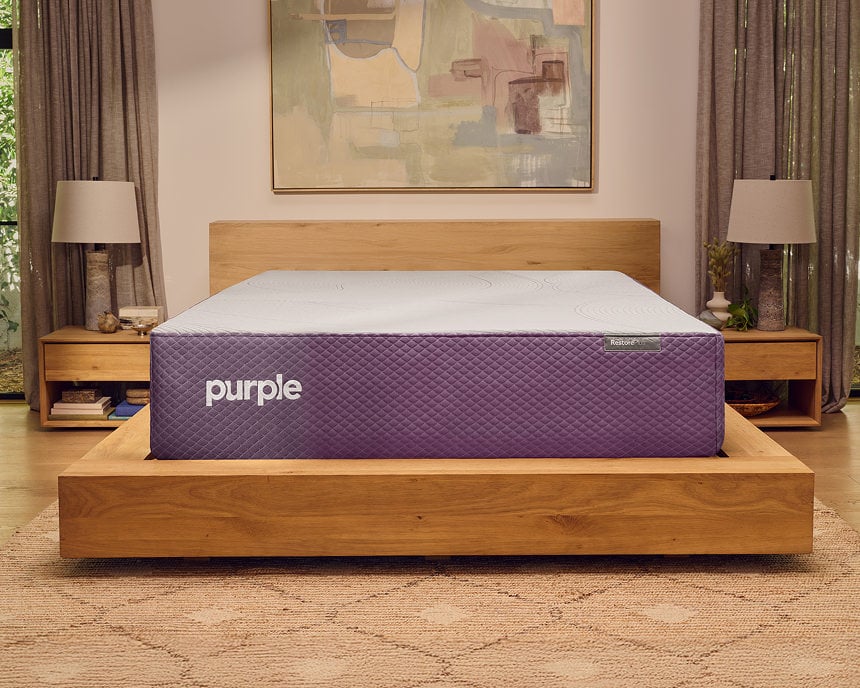
If motion isolation is the primary cortisol concern, meaning a restless partner is the main source of overnight arousal events, TEMPUR material is the most effective engineering solution available. It absorbs movement at the point of origin rather than transmitting it. Trade-off is warmth: better suited to cooler sleepers or those in cooler rooms.
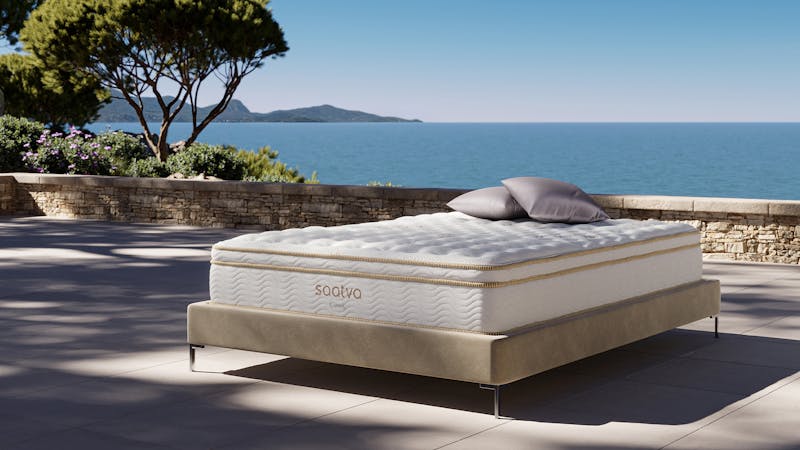
The pocketed coil base provides the airflow to prevent thermal cortisol triggers, and the euro top provides enough pressure relief to keep the physical stressor burden low across a range of sleep positions. The motion isolation is meaningfully better than a standard innerspring without reaching foam levels. For stress-affected sleepers without a single dominant issue, the DreamCloud Premier addresses all relevant variables at a mid-range price.
Related Reading
Full ranked list
Best Mattress for Couples
See every mattress we tested for couples, ranked by performance score.
Top Picks for Hot Sleepers
See full list →Ranked by test data
Not sure which mattress is right for you?
Take our 60-second quiz and we'll match you with the best options for your sleep style and budget.
Take the Free Quiz →