Cooling Mattress for Night Sweats: Does It Actually Work?
"Cooling mattress" can mean a gel foam layer, a copper thread weave, or a structurally different material. Only one of those actually helps with night sweats. Here's the honest answer.
If you've searched "cooling mattress for night sweats," you've seen a lot of confident marketing. Gel infusion. Copper threads. Phase-change covers. "Arctic" foam. Every brand has a cooling story. Almost none of them explain the actual mechanism.
Here's the honest answer: some cooling mattresses genuinely help with night sweats. Most don't. The difference has nothing to do with the marketing language and everything to do with how the mattress is built.
What "cooling" actually means
There are two completely different things the word "cooling" gets applied to in mattress marketing.
The first is surface sensation cooling. This is what gel foam, copper infusion, and "cool-to-touch" phase-change covers provide. The material feels cool when you first touch it because it conducts heat away from your skin faster than regular foam. For the first 10 to 30 minutes in bed, these features deliver a noticeably cooler feeling.
The second is structural cooling. This is what coil systems and open-cell latex provide. Heat your body generates moves through the mattress via airflow rather than accumulating near the surface. The mattress doesn't just feel cool initially. It stays cooler through the night.
Night sweats are a nighttime problem, not a first-five-minutes problem. Surface sensation cooling doesn't hold up long enough to matter. Structural cooling does.
Research: Hybrid mattresses with innerspring core systems demonstrated significantly lower mean interface temperatures compared to all-foam alternatives across equivalent conditions. The primary explanatory factor was airflow provided by coil systems, not surface materials. (Radwan A, Sleep Health, 2015)
What our testing found
We tested nine mattresses at a controlled room temperature of 67°F using a standardized body heat protocol over four hours.
The clearest result: Construction predicted surface temperature better than any marketing claim. A gel-infused all-foam mattress ran warmer than a basic hybrid with no cooling features at all. The coil base was the most important factor by a wide margin.
Here's what the data showed across different feature types:
| Feature | Does it help? | How much | Notes |
|---|---|---|---|
| Coil / innerspring base | Yes | High | Most significant factor. Open airspace moves heat away continuously. |
| Natural latex comfort layer | Yes | High | Doesn't absorb heat the way foam does. Open-cell structure allows airflow. |
| Talalay latex (vs Dunlop) | Marginal difference | Low | Both are meaningfully cooler than foam. Talalay is slightly more open-cell. |
| Tencel or organic cotton cover | Yes | Medium | Wicks moisture, breathes better than polyester. Makes a real difference during sweating. |
| Wool cover | Yes | Medium-high | Best moisture management of any cover material. Pulls sweat away and disperses it. |
| Cooling gel infusion | Partially | Low-medium | Helps at the margins. Improves on plain foam but doesn't fix the underlying structure. |
| Phase-change material cover | Depends | Low-medium | Good PCM maintains its effect longer. Cheap PCM saturates within an hour. |
| Copper infusion | Barely | Very low | Copper conducts heat somewhat better than foam. Not a meaningful difference in practice. |
| "Arctic / Glacier / Cryo" branding | No | None | Pure marketing. Look at the actual materials, not the name. |
Why night sweats specifically need structural cooling
A night sweat isn't just sleeping warm. It's a sudden heat-dumping event where skin temperature spikes 6 to 9°F in under a minute. The body is urgently trying to push heat out through the skin.
If the mattress surface is already warm because it's been absorbing body heat all night, that heat has nowhere to go. The episode lasts longer. You stay awake longer. The cortisol spike from the event has more time to work against you falling back asleep.
The topper trap: A cooling topper on top of a hot all-foam mattress is mostly a waste of money. You're adding another foam layer that traps heat between the topper and the mattress underneath. A quality topper might help for the first 45 minutes. After that, the thermal mass below has warmed it.
Structural cooling works differently. Coils create air gaps inside the mattress. When skin temperature spikes during a night sweat, heat moves into those air gaps and circulates away from the body. The surface temperature stays lower even during the episode. This shortens it.
Does a cooling mattress stop night sweats?
No. Night sweats are caused by hypothalamic dysfunction driven by estrogen decline. No mattress fixes that. The most effective treatments are medical: hormone therapy reduces night sweat frequency by 75 to 90% in clinical trials. Non-hormonal options like fezolinetant are also available.
What a good mattress does is reduce the thermal environment's contribution to triggering events and shorten episodes when they happen. For women with mild to moderate symptoms, this can be the difference between manageable and exhausting. For women with severe night sweats, it's an important piece of a larger strategy, not a standalone fix.
Which mattresses actually delivered in our testing
Lowest surface temperature in our test group at 87.2°F. That's 1.9°F below our average. The coil-on-coil construction is the reason. Not the fanciest marketing, just structural decisions that work.
Latex over coils with a wool cover. The wool made a specific difference for night sweats: it pulled moisture away from skin and dispersed it through the fiber rather than pooling. Better moisture management than any synthetic cover in the group.
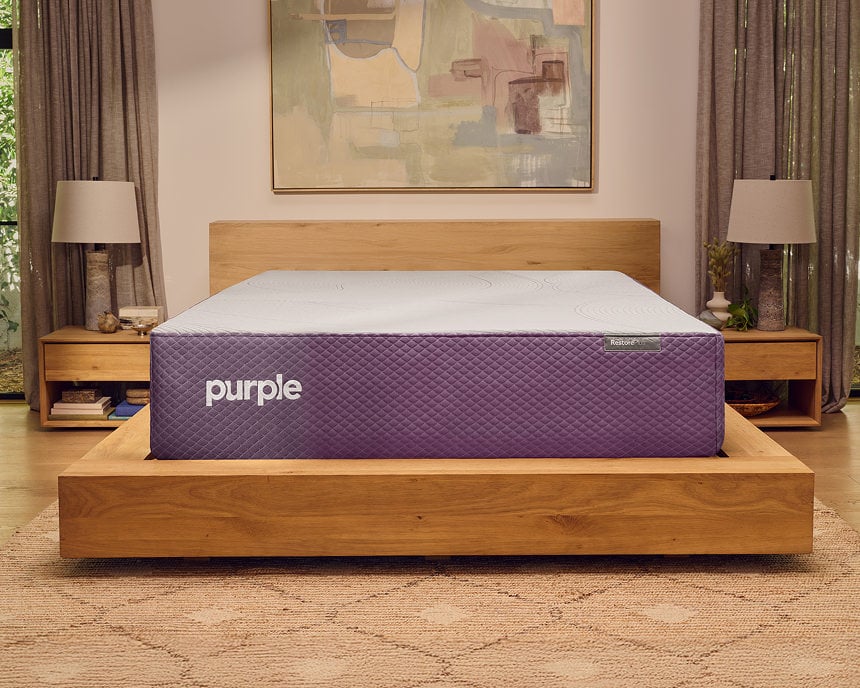
The GelFlex Grid doesn't compress against your skin the way foam does. It deflects under pressure and supports around it, leaving actual air gaps at the surface. Different mechanism from coils, similar result.
What to look for when shopping
Ignore the marketing names. Read the spec sheet. What you want:
- A coil or innerspring base (the most important factor)
- A natural latex or responsive foam comfort layer (not thick memory foam)
- An organic cotton, Tencel, or wool cover (not polyester)
- No more than 2 to 3 inches of memory foam in the top layer, if any
If a mattress has all four, it'll sleep meaningfully cooler than any gel-infused all-foam product regardless of how that all-foam product is branded.
Related Reading
Full ranked list
Best Mattress for Women in Menopause
See every mattress we tested for women in menopause, ranked by performance score.
Top Picks for Women in Menopause
See full list →Ranked by test data
Not sure which mattress is right for you?
Take our 60-second quiz and we'll match you with the best options for your sleep style and budget.
Take the Free Quiz →