Best Support Mattress for Plus-Size Sleepers (2026): What Support Actually Means
Support is the most misunderstood word in mattress marketing. For plus-size sleepers, support means the mattress maintains spinal neutrality under higher load without progressive sinkage during the night. The properties that deliver this are specific and measurable.
"Support" appears on nearly every mattress product page, but the word describes something specific and measurable: the mattress's ability to maintain the spine in a neutral position throughout the sleep period, regardless of body weight. For plus-size sleepers, achieving this is harder because the same compressive forces that create pressure at bony prominences also push the spine progressively out of alignment if the mattress does not provide adequate resistance.
A mattress can fail at support in two ways. It can be too soft, allowing the heaviest body segments (the hips and lumbar region) to sink deeply out of alignment, pulling the spine into lateral or sagittal flexion. Or it can be too firm, preventing the shoulder from sinking adequately in side sleeping, pushing the spine into lateral flexion in the other direction. For plus-size sleepers, the first failure mode is far more common because most standard mattresses are not designed to resist the higher compressive load they apply.
The lumbar zone problem at higher weights
The lumbar region is the heaviest segment of the body in most sleep positions. In back sleeping, the lumbar spine sits between the elevated thoracic region (supported by the rib cage and back musculature) and the pelvis, which rests directly on the mattress. If the mattress cannot resist the downward force of the pelvis adequately, the pelvis sinks, the lumbar spine rotates forward, and the natural lordotic curve is flattened or reversed.
For plus-size sleepers, this problem is magnified. The pelvis exerts more downward force, and standard mattress support cores are designed to resist loads in the 130 to 200 pound range. Above this range, the support core may compress more than designed, and the lumbar alignment the mattress provides for a lighter sleeper degrades.
Zoned support addresses this directly: firmer coils or higher-density foam at the lumbar zone resist the additional compressive force from the pelvis, maintaining alignment even when the overall mattress feel is softer than a uniformly firm product.
Research: Spinal alignment studies using lateral radiographs of subjects in standardized sleep positions found that lumbar curvature in back sleeping was most affected by pelvic sinkage relative to thoracic position. Subjects over 220 pounds showed significantly greater pelvic sinkage on medium-firm mattresses without lumbar zoning than on mattresses with reinforced lumbar zones, with corresponding degradation in lumbar lordosis. Lumbar-zoned mattresses maintained lordotic angle within normal ranges across weight groups. (Jacobson BH, Journal of Applied Ergonomics, 2010)
The nightly progression problem: Memory foam viscoelastically creeps under sustained load, meaning sinkage deepens gradually over the course of the sleep period. For a 150-pound sleeper, this effect is minor. For a 280-pound sleeper, the progressive sinkage from the time of lying down to 6 or 7 hours later can be significant enough to shift the spine from supported alignment into a flexed position. This is why some heavier sleepers feel fine at bedtime but wake with back pain: the mattress was adequate at the start and not at the end of the night. Coil-based support systems resist this progressive creep better than foam cores.
Edge support and sleep surface area
Plus-size sleepers use a higher proportion of the sleep surface than average. The body occupies a larger footprint, and sleeping positions that would place an average-weight sleeper comfortably within the supported zone may place a plus-size sleeper closer to the perimeter.
Edge support determines how much of the mattress surface is functionally usable. A mattress with weak edge support loses 4 to 6 inches on each side to the unsupported roll-off zone. For plus-size sleepers, this can meaningfully reduce effective sleep area, particularly in shared beds.
Reinforced perimeter coils or high-density foam edge encasement add structural resistance at the mattress edge, extending the usable surface to within 2 to 3 inches of the border. This matters for comfort but also for getting in and out of bed: a strong edge that does not collapse under full body weight during the sit-to-stand transition reduces fall risk and joint stress.
Weight capacity ratings: Many mattress manufacturers list weight capacity ratings. These ratings indicate the load at which the mattress will provide its designed performance, not the load at which it will physically fail. A mattress rated to 300 pounds (150 per side) will support a 350-pound sleeper from a structural failure standpoint, but it may not provide adequate spinal support or pressure distribution at that weight. Use weight capacity as a minimum threshold, not the target.
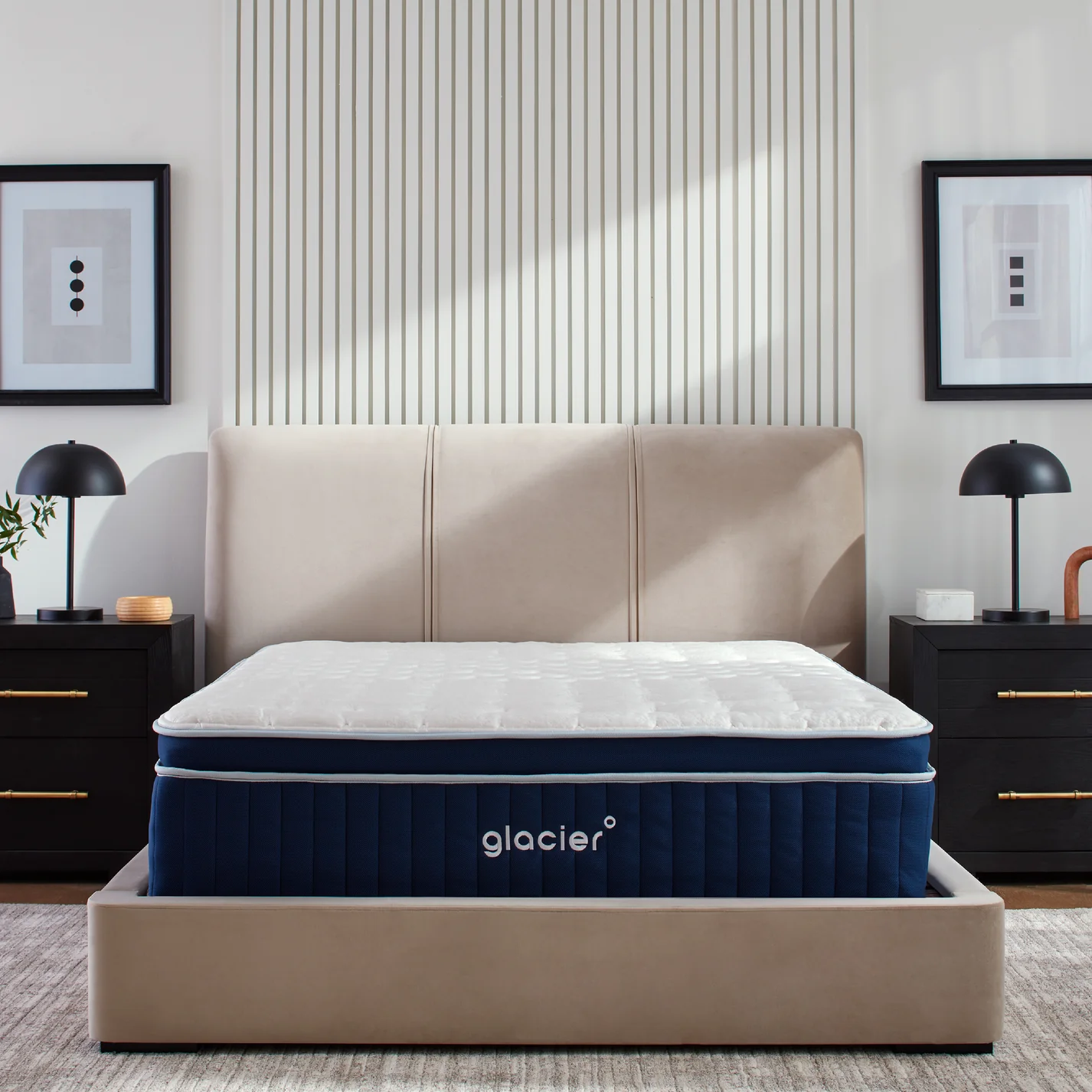
The dual-coil construction with reinforced lumbar zone is the most directly targeted support design for plus-size sleepers. The lumbar reinforcement resists the additional pelvic sinkage that degrades alignment under higher body weight. The coil-on-coil system resists progressive sinkage through the night in a way foam cores cannot, because the mechanical spring response does not creep the way viscoelastic foam does. Edge support is reinforced throughout the perimeter. The taller profile (14.5 inches) also provides a beneficial bed height for sit-to-stand transitions. Available in three firmness levels: Firm for back and stomach sleepers over 230 pounds, Luxury Firm for side sleepers in the 200 to 280 pound range.
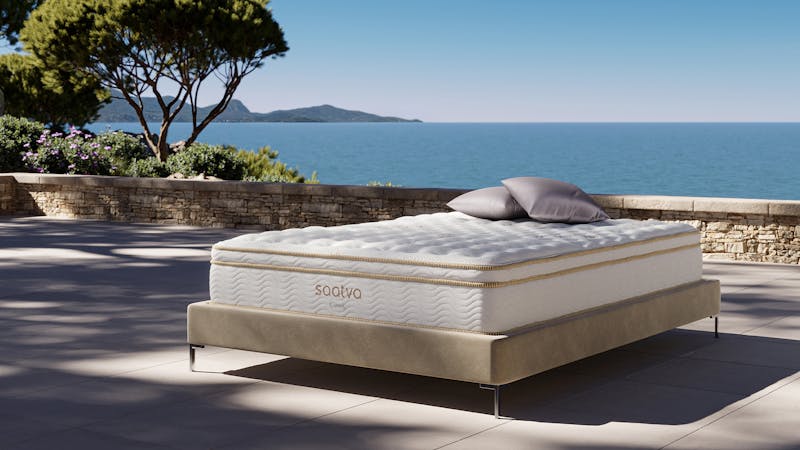
The pocketed coil system and depth of the euro top provide the support core resistance and comfort layer depth combination that plus-size sleepers need. The medium-firm positioning delivers an effective medium feel to sleepers in the 200 to 250 pound range. The perimeter coils maintain edge support under higher load. The coil base resists the progressive sinkage that contributes to nightly alignment degradation in foam-core alternatives. For plus-size sleepers sharing a bed, motion isolation from pocketed coils is an additional benefit.
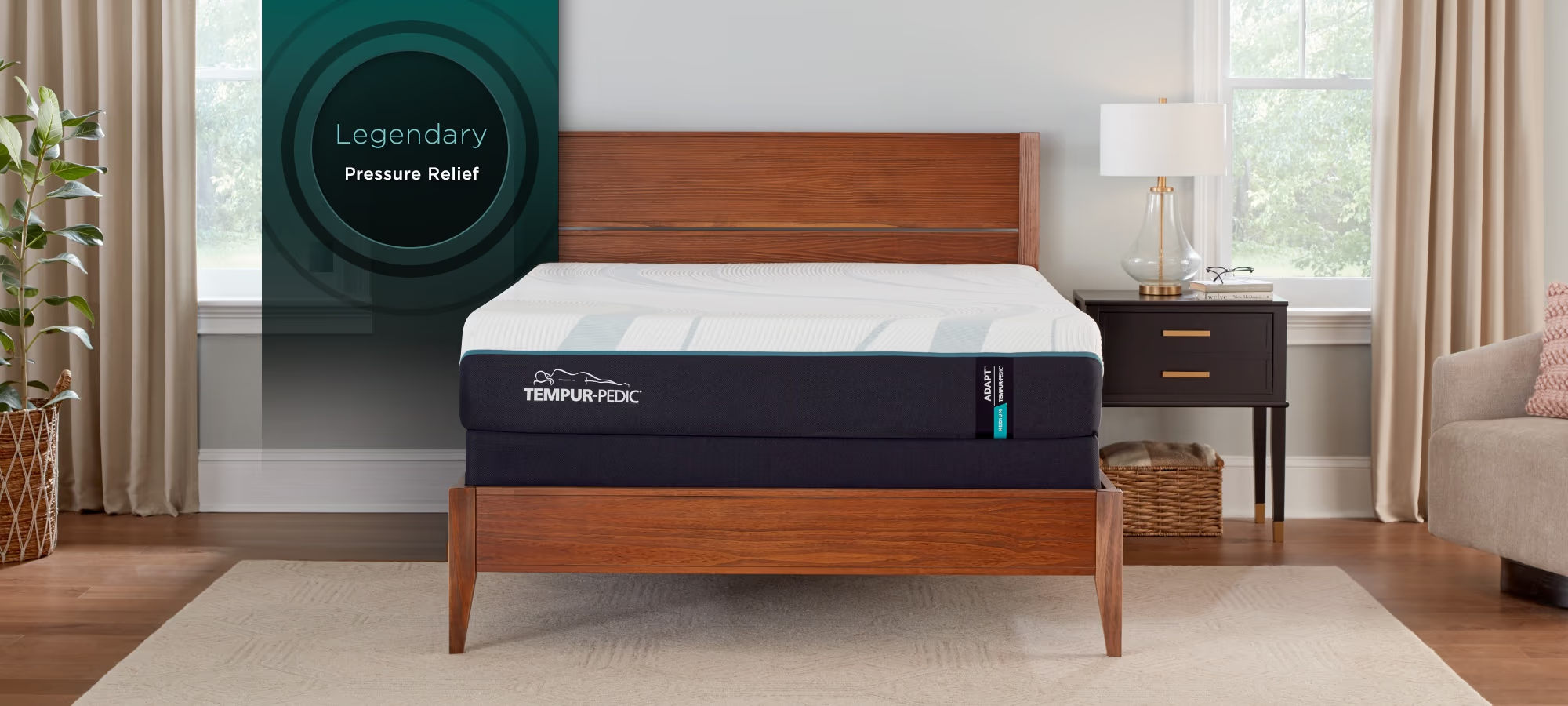
The RestorePlus adds a pocketed coil layer beneath the GelFlex Grid, providing support core resistance alongside the Grid's pressure distribution. The Grid does not compress progressively the way foam does: its polymer structure maintains the same response throughout the sleep period without viscoelastic creep. For plus-size sleepers with significant hip or shoulder pressure pain alongside their alignment needs, the RestorePlus provides both support and pressure distribution in a combination foam-over-coil hybrids cannot match. The Grid's mechanical consistency is a specific advantage for heavier sleepers whose weight would accelerate foam creep in other designs.
Related Reading
Full ranked list
Best Mattress for Back Pain
See every mattress we tested for back pain, ranked by performance score.
Top Picks for Back Pain
See full list →Ranked by test data
Not sure which mattress is right for you?
Take our 60-second quiz and we'll match you with the best options for your sleep style and budget.
Take the Free Quiz →