Best Mattress for Sciatica (2026): What Actually Helps and Why
Sciatica pain during sleep comes from nerve compression at the lumbar spine or piriformis muscle that is either created or worsened by poor sleeping position and mattress support. The right mattress reduces compressive load on the sciatic nerve pathway by maintaining spinal neutrality and relieving pressure at the hip.
Sciatica is not a diagnosis in itself. It is a symptom: pain, numbness, or tingling that radiates from the lower back through the buttock and down one leg, following the path of the sciatic nerve. The underlying cause is compression or irritation of the sciatic nerve or one of the nerve roots (L4 through S3) that form it.
At night, two things happen that make sciatica either better or worse: your sleeping position affects the amount of compressive load on the nerve pathway, and the mattress affects whether that position can be maintained in spinal neutrality or whether it degrades over hours of sleep. Getting both right is the difference between waking up with reduced pain or waking up worse than you went to bed.
The two causes of sleep-related sciatica
Understanding which mechanism is driving your sciatica helps determine which mattress properties matter most.
Lumbar disc herniation or stenosis (spinal origin). When a herniated disc or bone spur compresses a nerve root at the lumbar spine, sleep position affects how much pressure sits on that disc or how open the foraminal canal is. Flexion (bending forward) typically opens the foraminal space and reduces nerve root compression. Extension (backward bending) typically closes it. This is why sciatica from spinal causes often improves in the fetal position (flexion) and worsens in stomach sleeping (extension).
Piriformis syndrome (muscular origin). The piriformis muscle sits deep in the gluteal region and the sciatic nerve passes through or near it. When the piriformis is tight or inflamed, it can compress the sciatic nerve below the spine. Hip rotation and sustained pressure on the gluteal region (from lying on a too-firm surface) can aggravate piriformis tension. This type often worsens with sustained lateral compression on the affected side.
How to tell which type you have: Spinal-origin sciatica typically produces pain that radiates below the knee and follows a dermatomal pattern (specific stripe of skin). Piriformis syndrome typically produces pain concentrated in the deep buttock that may radiate into the back of the thigh but rarely below the knee. Your doctor can confirm with physical exam and imaging, but this distinction informs which sleeping position and mattress approach helps most.
The best sleeping position for sciatica
Side sleeping with a pillow between the knees is the most universally recommended position for sciatica from spinal causes. The pillow between the knees does two things: it prevents the upper leg from rotating forward and torquing the lumbar spine, and it maintains the hips in a stacked position that reduces lateral shear forces on the lumbar discs.
Research: EMG studies of lumbar disc pressure across sleeping positions confirmed that lateral decubitus (side lying) with the hips and knees flexed produced significantly lower intradiscal pressure at L4-L5 and L5-S1 than either supine or prone positions. Adding a pillow between the knees further reduced disc pressure compared to side lying without the pillow, by preventing hip drop and associated lumbar rotation. (Nachemson A, Spine, 1981)
Back sleeping with a pillow under the knees is the second-best option for spinal-origin sciatica. Elevating the knees releases the hip flexors and allows the lumbar spine to flatten slightly, reducing foraminal pressure at the affected level.
Stomach sleeping is contraindicated for almost all sciatica from spinal causes. The lumbar hyperextension inherent to prone sleeping closes the foraminal canal and increases compressive load on posterior disc elements.
How the mattress contributes
The mattress affects sciatica through two mechanisms.
Hip pressure in side sleeping. Side sleeping with a pillow between the knees is the recommended position, but it concentrates load on the lateral hip. If the mattress surface is too firm, the greater trochanter (the bony prominence of the outer hip) bears concentrated pressure. This produces two problems: direct pressure pain at the hip, and lateral compression of the gluteal muscles that can aggravate piriformis tension in piriformis syndrome.
A mattress with adequate give at the hip zone allows the greater trochanter to sink slightly, distributing the load across the hip and thigh rather than concentrating it.
Lumbar support in all positions. The mattress must provide enough support to maintain the lumbar spine in the position you achieve at the start of the night. If the mattress is too soft, the lumbar gradually sinks as the foam compresses or the coils settle, rotating the pelvis and stressing the lumbar discs as the night progresses. People with sciatica often report that they fall asleep comfortably but wake with increased pain: this is frequently a mattress-support failure over time.
Research: Clinical studies of patients with lumbar disc herniation and associated radicular symptoms found that medium-firm mattresses produced significantly better outcomes (reduced radicular pain, improved sleep quality) at 12-week follow-up compared to firm mattresses, which were the previous standard recommendation. The proposed mechanism was better pressure distribution at the hip and shoulder reducing compensatory lumbar rotation. (Kovacs FM, The Lancet, 2003)
A common mistake: Choosing a very firm mattress because sciatica is perceived as a back pain condition requiring firm support. Firm mattresses are appropriate for back sleepers without nerve pain. For side-sleeping sciatica patients, a firm mattress creates hip pressure that worsens piriformis tension and disrupts the neutral spinal position that side sleeping with a knee pillow is trying to achieve. Medium-firm is nearly always the better choice.
The zoned pocketed-coil construction is specifically designed to provide softer zones at the shoulder and hip with a firmer lumbar zone. For sciatica patients sleeping on their side, this means the hip sinks enough to relieve greater trochanter pressure while the lumbar region stays supported to prevent the spinal rotation that worsens nerve root compression. The combination of hip pressure relief and lumbar support is the most direct mattress match for spinal-origin sciatica.
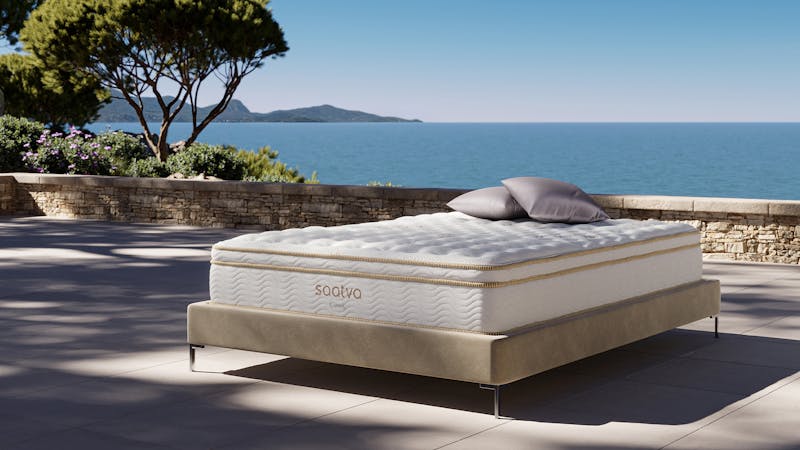
The Saatva in Luxury Firm provides the reinforced lumbar zone support that sciatica patients need, with enough comfort layer depth to relieve hip pressure in side sleeping. The dual-coil construction maintains support consistently across the night without the gradual foam compression that contributes to lumbar sag. For back-sleeping sciatica patients or those who need particularly strong lumbar support, this is the more appropriate choice than the Helix.
For sciatica patients who also run hot (heat can aggravate nerve inflammation) or who share a bed and need motion isolation alongside sciatica support, the DreamCloud Premier provides pocketed coil airflow and meaningful hip pressure relief at a mid-range price. The medium-firm positioning sits in the optimal range for most sciatica presentations.
Related Reading
Compare top picks side by side →Full ranked list
Best Mattress for Back Pain
See every mattress we tested for back pain, ranked by performance score.
Top Picks for Back Pain
See full list →Ranked by test data
Not sure which mattress is right for you?
Take our 60-second quiz and we'll match you with the best options for your sleep style and budget.
Take the Free Quiz →