Best Mattress for Elderly Men in 2026
Men over 65 tend to weigh more than their female counterparts, have higher rates of spinal stenosis and sleep apnea, and face a different set of joint complaints. The mattress requirements follow from those differences.
Men over 65 are not a monolith, but there are consistent physiological patterns that shape mattress requirements for this group. Higher average body weight than older women means different compression dynamics. Spinal stenosis is more prevalent in older men and creates specific sleep positioning problems. Shoulder width and the way male bodies distribute weight affect pressure at different contact zones.
These are specific enough to be worth addressing directly rather than folded into a generic senior guide.
Spinal stenosis and what it means for sleep
Lumbar spinal stenosis is a narrowing of the spinal canal that compresses the nerve roots exiting the lower spine. It produces pain, numbness, and weakness in the lower back, hips, and legs. The defining characteristic is that symptoms improve with spinal flexion (bending forward) and worsen with extension (arching back).
This has direct implications for sleep position and mattress choice.
Back sleeping with the spine in extension, as happens on a firm mattress that arches the lumbar region, compresses the stenotic canal further. Many men with stenosis find that back sleeping on a firm surface is genuinely painful and wake up with significant leg pain or numbness.
Side sleeping with the hips slightly flexed, which naturally flexes the lumbar spine, opens the stenotic space and reduces nerve root compression. A medium to medium-firm mattress that allows the hip to sink slightly into the surface supports this position better than a flat firm surface.
Research: Lumbar spinal stenosis symptoms correlate with lumbar extension. During back sleeping on a firm mattress, lumbar lordosis increases relative to a slightly flexed lateral position, producing measurably higher intradiscal pressure and nerve root loading. (Genevay S, Arthritis and Rheumatism, 2008)
A pillow under the knees when back sleeping: For men with spinal stenosis who prefer back sleeping, a pillow under the knees flexes the hips and flattens the lumbar spine enough to partially open the stenotic canal. This is the single most useful adjustment for managing stenosis-related sleep pain on a suboptimal mattress. The mattress itself should still have enough give to avoid extension loading at the lumbar region.
Body weight and mattress compression
At 180 pounds, an older man compresses mattress comfort layers more than a lighter sleeper. The practical effect: a mattress rated medium-soft may feel closer to medium because the body weight engages the support layers more fully. A mattress rated medium-firm may feel quite firm.
For side sleeping, adequate compression of the hip into the mattress is necessary to reach the pressure relief the comfort layer is designed to provide. Heavier bodies do this naturally. The risk shifts the other way: too much compression, where the hip sinks through the comfort layer and contacts the firmer support core, creates a hard point under the joint.
The practical implication: men over 65 generally do not need a particularly soft mattress to get pressure relief at the hip and shoulder. A medium to medium-firm surface is usually adequate. Where lighter women need to go softer to engage the comfort layer, heavier men need to ensure they do not sink through it.
Shoulder mechanics in side-sleeping men
Men have, on average, broader shoulders than women relative to hip width. In side sleeping, this affects spinal alignment in a specific way. If the shoulder is significantly wider than the hip, the shoulder contact point is farther from the spine's centerline. This changes the angle at which the spine needs to compensate.
On a mattress that is too firm for the shoulder width, the shoulder cannot sink in adequately and the upper spine is pushed into lateral bending. On a mattress with good shoulder zone compliance, the shoulder sinks and the spine stays neutral.
This is why zoned coil systems, which have softer coils at the shoulder and firmer coils at the hip and lumbar region, are particularly well-suited to men with broader shoulder builds. A single-firmness mattress has to compromise between the two zones.
Prostate issues and nighttime waking
Benign prostatic hyperplasia (BPH) affects the majority of men over 60. Nocturia, the need to urinate once or more per night, is the most common sleep disruption in older men. While this is primarily a urological issue, the mattress plays a secondary role: getting out of bed when the urge strikes at 3am is significantly easier from a mattress with solid edge support and the right height.
A mattress with poor edge support requires more coordination and effort to get off safely. For a man waking up with urgency, groggy, possibly with some joint stiffness, an unstable edge is a fall risk. This is not a marketing angle. It is a functional consideration.
Sleep apnea and position
Obstructive sleep apnea is more prevalent in older men than older women. The standard advice for mild to moderate sleep apnea is lateral sleeping, which keeps the airway more open than back sleeping. If you use a CPAP machine, a mattress that is easy to reposition on is important because the CPAP hose limits how freely you can move.
Memory foam, with its slow response and tendency to create body impressions, is harder to reposition on than latex or hybrid alternatives. If CPAP use and frequent repositioning are part of your night, a responsive surface makes a real difference.
On very firm mattresses marketed to "heavy" sleepers: Mattresses rated extra-firm or firm for heavy-weight sleepers are designed for adults over 250 to 300 pounds. A 180-pound man on one of these surfaces will be sleeping on something significantly firmer than necessary. The hip and shoulder will not compress the surface at all, and sustained pressure at those bony prominences will exceed the comfort threshold within a few hours.
Specific recommendations
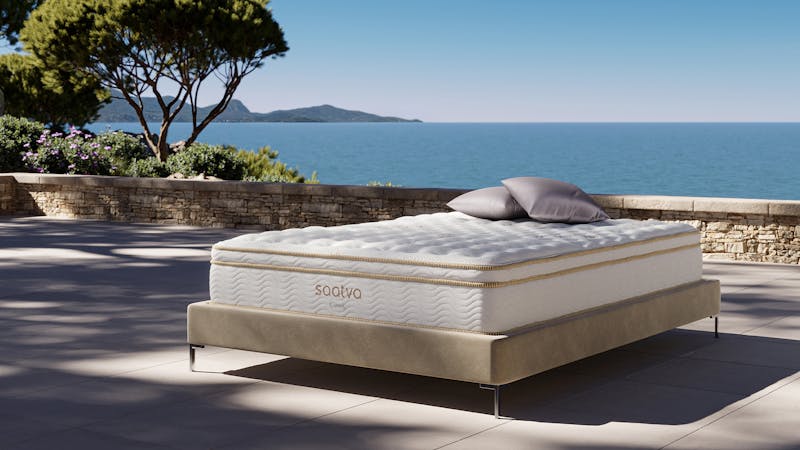
The lumbar enhancement bar directly addresses the spinal support issue that matters most for men with stenosis or disc-related lower back pain. The coil-on-coil system provides real structural integrity at the edges for safe and easy getting in and out of bed. Available in three firmness levels; Luxury Firm is the right call for most men over 65, with Plush Soft an option for those with significant hip and shoulder soreness from side sleeping.
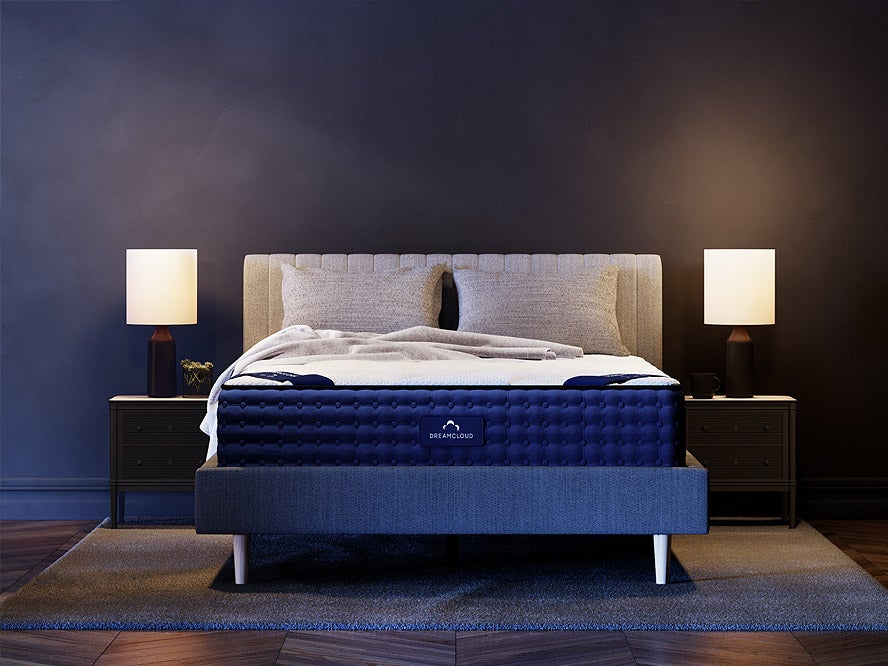
Individually wrapped coil system with reinforced perimeter. The medium-firm feel is well-calibrated for the average male body weight at 65-plus. The cashmere-blend cover adds a comfortable surface without aggressive cooling. The coil base provides long-term durability and consistent edge support.
For men whose primary problem is nerve-related pain rather than joint pressure, TEMPUR material distributes weight in a way that reduces localized pressure at the specific points producing pain. Less indicated for those whose main issue is stenosis (due to the slow response and slight heat retention), but the best option for radiating pain from disc herniation or sacroiliac joint dysfunction.
What to do if you already have a mattress
If your current mattress is too firm but otherwise in good condition, a 2-inch latex topper adds pressure relief at the hip and shoulder without changing the underlying support structure. Memory foam toppers work but are not ideal because they add the slow-response problem on top of whatever is underneath.
If your mattress has developed a center sag, that is the support core failing and a topper will not fix it. The sag creates the lateral spinal flexion that makes back pain worse overnight. At that point, replacement is the correct call rather than layering more foam over a compromised foundation.
Related Reading
Compare top picks side by side →Full ranked list
Best Mattress for Seniors
See every mattress we tested for seniors, ranked by performance score.
Top Picks for Seniors
See full list →Ranked by test data
Not sure which mattress is right for you?
Take our 60-second quiz and we'll match you with the best options for your sleep style and budget.
Take the Free Quiz →