Best Mattress for Arthritis in 2026
Arthritis sleep problems have three distinct sources — joint pressure during the night, morning stiffness from inflammation accumulation, and difficulty getting in and out of bed. The right mattress addresses all three differently.
Arthritis is not one condition. Osteoarthritis (OA) involves mechanical wear of cartilage in specific joints. Rheumatoid arthritis (RA) is an autoimmune condition causing systemic inflammation that is often worst in the morning. The sleep problems they create overlap but are not identical.
What they share: joints under sustained pressure during sleep become more painful, and sleep deprivation worsens the inflammatory response regardless of which type you have. The mattress you sleep on directly influences how much sustained pressure your joints experience through the night.
How arthritis affects sleep and why the mattress matters
Osteoarthritis
OA is most common in the hip, knee, spine, and hand joints. The degraded cartilage in these joints has less shock absorption and distributes force less evenly. During sleep, sustained pressure on an OA-affected hip or shoulder loads a joint surface that is already compromised.
Interface pressure at the greater trochanter on a firm mattress during side sleeping has been measured at 55 to 75 mmHg in adults over 65. This exceeds the 32 mmHg capillary occlusion threshold by a factor of 1.7 to 2.3. The tissue around the joint, including the synovial membrane and periarticular structures, is under ischemic stress for hours. The result is the morning soreness and stiffness that OA patients often describe as "having to warm up for an hour before the pain settles down."
On a medium to medium-soft surface where the hip sinks appropriately, peak interface pressure drops to 25 to 35 mmHg. The joint tissue maintains perfusion through the night and the inflammatory response does not accumulate in the same way.
Rheumatoid arthritis
RA inflammation follows a diurnal pattern: cytokine levels and synovial inflammation tend to peak in the early morning hours. This is why RA morning stiffness is often worst between 4 and 8am, and why people with RA report that the last few hours before waking are often the most painful.
A mattress that adds mechanical joint loading on top of the inflammatory peak makes this window worse. A surface with adequate pressure relief at the affected joints reduces the compound effect of inflammation plus positional compression.
Sleep deprivation itself worsens RA through a separate mechanism. The proinflammatory cytokines IL-6 and TNF-alpha are suppressed during normal sleep. When sleep is fragmented or shortened, cytokine suppression is incomplete and the inflammatory baseline rises. Getting adequate sleep is not just comfort: it is disease management.
Research: Sleep disruption in rheumatoid arthritis patients is bidirectionally related to disease activity. Poor sleep predicts next-day increases in pain and fatigue, and increased disease activity predicts next-night sleep disruption. A mattress that reduces mechanical pain during sleep breaks one side of this cycle. (Wolfe F, Arthritis Care and Research, 2010)
What firmness arthritis actually needs
The most common mistake in arthritis mattress selection is going too firm. The intuition is that support prevents joint strain. But for the joints that bear the most sleep pressure — the hip, shoulder, and rib cage — firmness increases interface pressure, not decreases it.
For side sleepers with hip OA, a firm mattress concentrates load at the greater trochanter (top of the femur) rather than distributing it across the surrounding tissue. The inflamed, cartilage-thinned joint receives the same concentrated pressure night after night.
The right firmness for most arthritis sufferers who side sleep is medium to medium-soft. This allows the hip and shoulder to sink into the surface enough to distribute force across a wider contact area while keeping the lumbar spine supported.
Back sleepers can go slightly firmer (medium to medium-firm) since the pressure distribution across the back is inherently better than at the hip during side sleeping.
On "orthopedic" mattress marketing: The term "orthopedic" has no clinical definition in the mattress industry. It is not regulated and does not imply any testing, certification, or review by orthopedic professionals. Mattresses sold as orthopedic are typically either firm innersprings or dense foam mattresses — neither of which is the best choice for most arthritis sufferers. The term is marketing copy, not a functional specification.
Temperature, inflammation, and sleep surface
Arthritic joints are more painful in cold conditions. Cold temperatures increase synovial fluid viscosity (making it thicker and less effective as a lubricant), reduce tissue pliability around the joint, and trigger muscle guarding that increases joint compression.
A mattress that actively cools the sleep surface, through gel foam, copper infusion, or phase-change materials, can make morning joint pain worse for people with temperature-sensitive arthritis. This runs counter to the marketing of most premium foam mattresses, which emphasize cooling as a selling point.
If your arthritis symptoms are worse in cold conditions, an innerspring or hybrid mattress with a temperature-neutral cover is a better choice than an actively cooling foam mattress. Wool is the best natural cover material for temperature regulation: it manages moisture (preventing clammy cold that worsens joint sensitivity) while providing gentle warmth.
Getting in and out of bed with arthritis
Hand and wrist OA affects grip strength and makes it painful to push up from a soft mattress surface. Knee OA makes swinging your legs off a low bed and coming to standing significantly harder. Hip OA makes any asymmetric loading during the transition from lying to standing painful.
The mattress variables that affect this:
Height. A mattress at knee height requires the least hip flexion and the least quadriceps force to stand up from. Too low, and the mechanics of getting up become a significant daily pain event.
Edge support. A stable edge means your hands and hips are pushing from a surface that does not collapse. This matters both for getting up and for sitting on the edge to put on shoes or socks.
Surface responsiveness. A responsive surface (latex or hybrid) makes it easier to shift position and swing your legs to the edge without fighting the material.
Research: In adults with lower-extremity OA, the biomechanics of rising from a seated position are directly affected by the softness and height of the seating surface. Interface instability and excess hip flexion during rising are associated with increased pain and fall risk. The same mechanics apply to bed exit. (Weiner DK, Arthritis and Rheumatism, 1993)
Specific recommendations
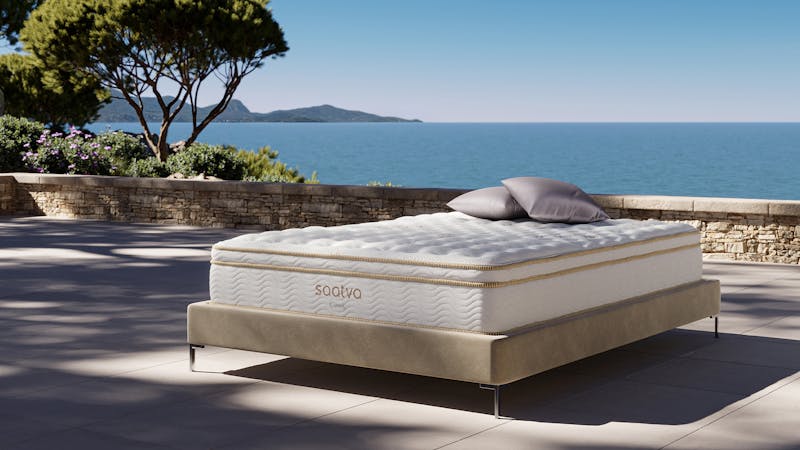
The zoned coil system delivers softer compliance at the shoulder and hip (where arthritis pressure accumulates) and firmer support under the lumbar region. For side sleepers with hip or shoulder OA, the pressure profile matches what arthritic joints need: distribution of load across a wider contact area rather than concentration at the bony prominence. The Tencel cover manages moisture without aggressive cooling.
TEMPUR material distributes weight differently from standard polyfoam. Rather than concentrating load at contact points, it conforms to the body contour and spreads force more uniformly. For people with RA whose joint inflammation is systemic and not limited to one hip or shoulder, the all-over pressure distribution is better than a zoned system. The slow response is a disadvantage for frequent repositioning, but for those who sleep primarily in one position, the pressure relief is among the best available.
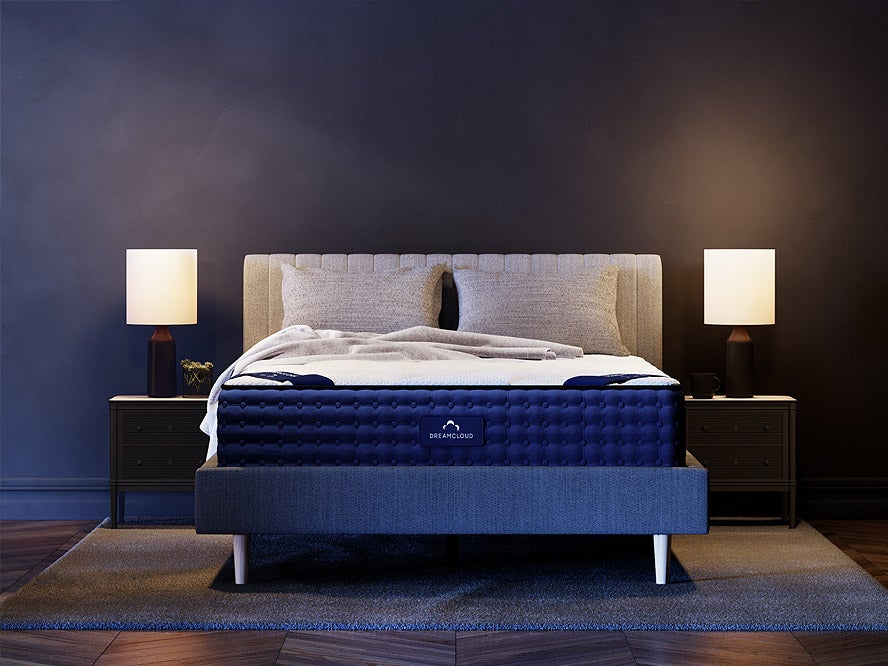
The GelFlex Grid deflects under pressure points while maintaining support in surrounding areas. This means the hip or shoulder sinks into the grid without the surrounding surface giving way, which maintains spinal alignment while relieving joint pressure. The immediate response of the grid (versus foam's slow return) is better for the nighttime repositioning that arthritic joints often demand.
One adjustment that costs nothing
If you are waking with significant stiffness at a specific joint, try adding a small pillow or folded towel under that joint to offload it slightly. For hip OA in side sleepers, a pillow between the knees redistributes the torque on the hip and often reduces morning pain independent of what mattress you are on. This does not fix a bad mattress, but it tells you whether the joint mechanics are the primary driver before you spend money on a new sleep surface.
When to bring the mattress question to your rheumatologist
If your morning stiffness has been increasing and you have not changed your mattress in 6 or more years, mention it to your rheumatologist. They may be able to offer positioning advice specific to your joint involvement pattern. Mattress selection is not outside the scope of disease management for arthritis: sleep quality directly affects inflammatory markers and daily function.
Related Reading
Compare top picks side by side →Full ranked list
Best Mattress for Seniors
See every mattress we tested for seniors, ranked by performance score.
Top Picks for Seniors
See full list →Ranked by test data
Not sure which mattress is right for you?
Take our 60-second quiz and we'll match you with the best options for your sleep style and budget.
Take the Free Quiz →