Best Mattress for Seniors and Older Adults in 2026
The needs of a 70-year-old sleeper are genuinely different from those of someone in their 30s. Edge support, pressure distribution, and getting out of bed without help are the real priorities.
Most mattress guides aimed at seniors are just regular guides with the word "senior" added to the headline. They recommend the same medium-firm hybrids they recommend for everyone else, with a note about "pressure relief" added at the end.
The actual needs of a 70- or 75-year-old sleeper are different enough that they deserve a guide built around those specific factors rather than retrofitted from a general recommendation.
Why age changes what you need from a mattress
Three things change with age that directly affect mattress requirements.
Body composition shifts. Muscle mass declines (sarcopenia) and body fat redistributes toward the trunk. The result is often less tissue padding over bony prominences at the hip, shoulder, and heel. Less cushioning means those pressure points transmit more load to the mattress surface, and interface pressure at those zones goes up even at the same body weight.
Thermoregulation becomes less efficient. Core body temperature regulation weakens with age. Older adults are more likely to feel cold during sleep and more vulnerable to being woken by temperature shifts. This matters because most mattresses are now engineered around cooling rather than heat retention, which is exactly backwards for many seniors.
Mobility changes. Getting in and out of bed is harder when knees, hips, and lower back are stiffer. A mattress that sags at the edge, or sits too low, or doesn't provide a stable base for pushing to standing, becomes a functional problem rather than just a comfort one.
Research: Body composition changes in older adults, specifically the decline in skeletal muscle mass and redistribution of subcutaneous fat away from bony prominences, increase peak interface pressure during sleep by an estimated 15 to 22 percent relative to middle-aged adults at equivalent body weight. (Defloor T, Journal of Advanced Nursing, 2000)
Edge support: why it matters more than most guides admit
For younger sleepers, edge support is about not rolling off the bed. For seniors, it is a mobility and fall prevention issue.
When you sit on the edge of a mattress to put on shoes, stand up, or reposition during the night, a mattress with poor edge support collapses under you. That instability creates a balance problem. For someone with knee or hip stiffness, an unstable edge at the moment of standing up is exactly when falls happen.
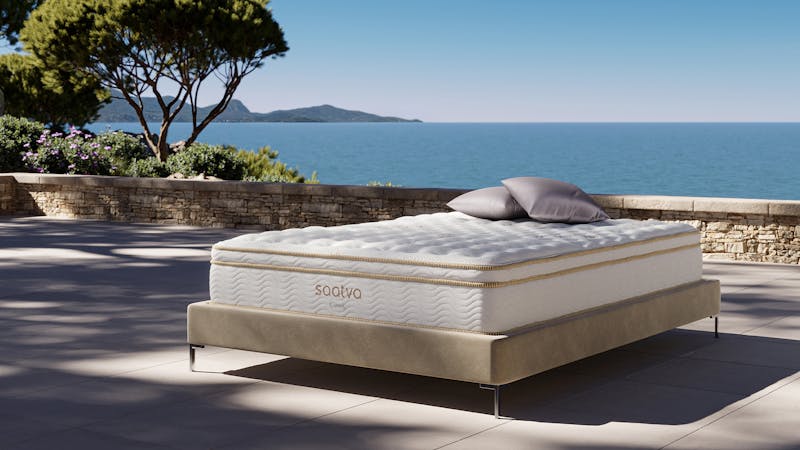
Innerspring and hybrid mattresses with reinforced perimeter coils maintain edge support far better than foam-only mattresses. The Saatva Classic uses a dual-tempered steel coil system around the perimeter that holds its profile even under concentrated sitting weight. Memory foam mattresses have no mechanical edge support; the edge compresses as much as the center does.
Mattress height matters too: A mattress plus box spring combination should place the sleeping surface at roughly knee height when you are standing. For most adults, that is between 23 and 28 inches total. Too low makes standing up significantly harder. Too high creates a step-up risk when getting into bed. If your mattress is already at the right height, avoid adding a thick topper that raises it further.
Pressure relief and why seniors are at higher risk
Pressure ulcers (also called bedsores or pressure injuries) are a concern primarily for people who are immobile. But subclinical versions of the same mechanism affect seniors who move less during sleep than they used to. The Braden Scale, the standard clinical tool for pressure injury risk, specifically accounts for age-related changes in skin integrity, sensory perception, and mobility.
The clinical threshold for capillary occlusion is 32 mmHg of sustained interface pressure. Firm mattresses produce peak pressures of 55 to 75 mmHg at the greater trochanter during side sleeping in adults over 65. Medium to medium-soft surfaces can reduce this to 25 to 35 mmHg. The difference is not just comfort: it is whether tissue remains adequately perfused overnight and whether the inflammatory response from ischemia accumulates.
This matters even for healthy seniors who are not bedridden. Waking up with a hip or shoulder that feels bruised or deeply sore is often this mechanism, not just "sleeping on it wrong."
Firmness: the medium range is correct for most seniors
Medium to medium-firm (around 5 to 6 on a 10-point scale) is the right starting point for most seniors who side sleep. Here is the reasoning:
A surface that is too firm creates the pressure concentration problem described above. At the bony prominences, peak pressures rise because the hip and shoulder do not sink into the surface enough to distribute load.
A surface that is too soft creates a different problem. The hip sinks deeply and the lumbar spine follows. This creates a lateral bend in the spine that is sustained for hours. With age-related ligamentous laxity and disc narrowing, the spine has less passive protection against this positional stress.
The medium range does both jobs adequately: enough give at the pressure points, enough resistance to keep the spine from sagging.
Back sleepers can go slightly firmer, toward 6 to 7. The spine is more naturally supported in the supine position, and the goal shifts more toward lumbar support than hip cushioning.
Temperature: older adults often run cold
Most mattress cooling technology is irrelevant or counterproductive for older adults who sleep cold. Gel-infused foam, copper-infused covers, and phase-change materials are designed to dissipate body heat faster. For someone who is already struggling to maintain warmth through the night, this makes sleep quality worse, not better.
Innerspring and hybrid mattresses have natural internal airflow from the coil system and are neither particularly warming nor cooling. They are better suited for older adults who want temperature stability rather than active cooling. An organic cotton or wool cover adds gentle heat retention without trapping moisture.
If you do run warm in old age (less common but not rare), the same cooling features apply as for any other sleeper.
What mattress type works best for seniors
| Type | Seniors suitability | Notes |
|---|---|---|
| Hybrid (coil + foam or latex) | Best overall | Structural edge support, pressure relief, temperature neutral |
| Innerspring (quality) | Good | Strong edge support, easy to get out of, sleeps neutral |
| Latex | Good | Immediate response for easy repositioning, durable, no sagging |
| Memory foam | Fair to poor | Poor edge support, heat-trapping, slow response for repositioning |
| All-foam (budget) | Avoid | Edge collapse, sagging within 1 to 2 years, temperature problems |
The combination that most often serves senior sleepers: a hybrid with reinforced edge support, medium to medium-firm, with a coil base that creates internal airflow and a comfort layer that provides pressure relief at the hip and shoulder.
Research: Mattress type significantly influences interface pressure at bony prominences in older adults. Hybrid and latex surfaces produced 18 to 31 percent lower peak pressures at the greater trochanter compared to firm innerspring alternatives in a comparative study of adults over 65. (Lim R, Journal of Tissue Viability, 2015)
Specific recommendations
Coil-on-coil construction with a separately tempered perimeter coil system provides among the best edge support available. The lumbar enhancement bar prevents center sag. Available in three firmness levels, so it can be adjusted to body weight and position preference. White glove delivery includes setup and removal of the old mattress. For seniors, the delivery and setup service is not a minor point.
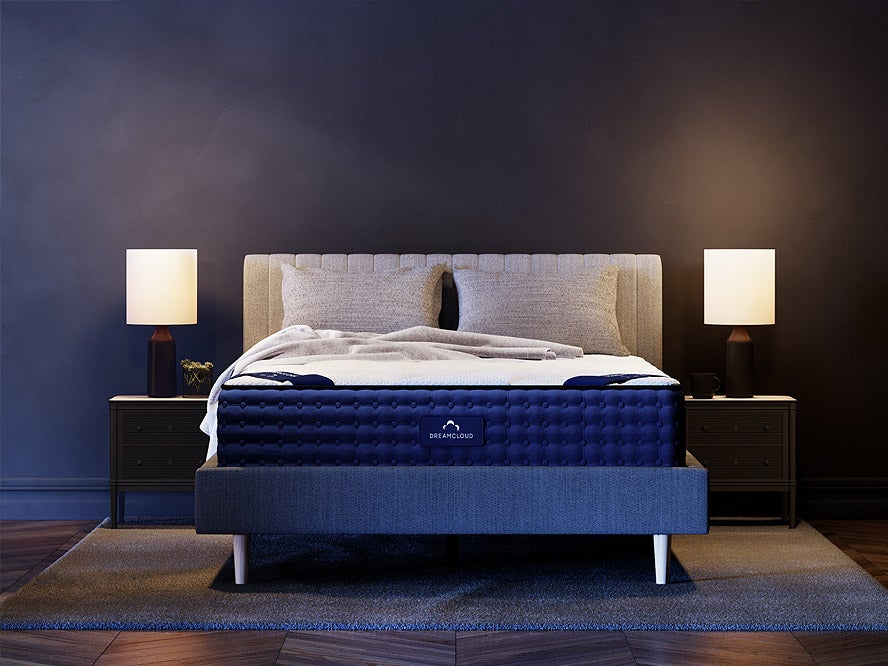
Individually wrapped coils with a cashmere blend cover. Good edge support from the reinforced perimeter. Medium-firm feel suits back sleepers and those who need more support than a plush surface provides. The coil base provides structural airflow and long-term durability.
Designed specifically for side sleepers with pressure relief at the hip and shoulder as the primary goal. The zoned coil system provides firmer support under the lumbar region and softer cushioning at the hip. For seniors with hip and shoulder soreness, this is the most targeted option in the group.
One adjustment worth making regardless of mattress
If you use a box spring, check whether it still has structural integrity. Box springs degrade faster than mattresses. A sagging box spring undermines any mattress placed on it and creates a sleeping surface that is neither supportive nor stable at the edges. Many seniors who replace their mattress and still have problems are sleeping on a 15-year-old box spring underneath.
Related Reading
Compare top picks side by side →Full ranked list
Best Mattress for Seniors
See every mattress we tested for seniors, ranked by performance score.
Top Picks for Seniors
See full list →Ranked by test data
Not sure which mattress is right for you?
Take our 60-second quiz and we'll match you with the best options for your sleep style and budget.
Take the Free Quiz →