Menopause, Night Sweats, and Sleep: Why It's So Hard and What Helps
Night sweats are bad enough on their own. But they're often just one part of a broader sleep problem during menopause. Here's what's actually going on, and what makes a real difference versus what sounds good in theory.
Sleep problems during menopause tend to get lumped together under "night sweats" like that's the whole story. It's not. Night sweats are often the most visible symptom, but the sleep disruption that comes with menopause is coming from several directions at once. Understanding what's actually driving it changes what you focus on fixing.
How many women this actually affects
A lot of women spend years thinking they're unusually sensitive or just bad sleepers, when the truth is that sleep disruption during menopause is extremely common.
Research: Between 40–60% of perimenopausal and postmenopausal women report significant sleep disturbances, making it one of the most prevalent symptoms of the menopausal transition, more commonly reported than mood changes or cognitive symptoms in many cohort studies. (Polo-Kantola P, Maturitas, 2011)
The transition itself is longer than most people expect. From the beginning of perimenopause through postmenopause, symptoms can span anywhere from 7 to 14 years.
What night sweats actually are
Night sweats during menopause are the nocturnal form of hot flashes. As estrogen declines, the hypothalamus becomes more reactive to small changes in core body temperature. Your body's thermoneutral zone (the range where it doesn't need to sweat or shiver) narrows. Triggers that wouldn't have bothered your old hormonal baseline now set off a full heat-dissipation response.
Research: The thermoneutral zone in symptomatic menopausal women was found to be less than 0.1°C wide in some studies, compared to approximately 0.4°C in premenopausal women, meaning virtually any thermal fluctuation can trigger a hot flash. (Freedman RR, Menopause, 2001)
Your mattress sits inside this system. If it's holding heat near your body, it's narrowing that already-thin margin further.
It's not just the night sweats
Here's what complicates things: many women during menopause develop sleep difficulties that exist independently of night sweats.
Progesterone loss: Progesterone has sedative properties. It interacts with GABA receptors in the brain, the same receptors targeted by sleep medications. As progesterone drops in perimenopause, some women lose a natural sleep-promoting effect without registering it as a hormone change. They just notice sleep feels harder.
Cortisol spikes: A nocturnal hot flash triggers cortisol, your primary stress hormone and wakefulness promoter. Even after the hot flash passes, your nervous system is activated and your body's chemistry is working against returning to sleep.
Sleep apnea risk: This one surprises most women. Estrogen and progesterone protect upper airway muscle tone. As they decline, the risk of developing obstructive sleep apnea increases substantially. Postmenopausal women have sleep apnea rates comparable to men.
Worth knowing: If you're sleeping terribly and can't explain it fully with hot flashes: persistent snoring, waking with headaches, excessive daytime fatigue — ask your doctor about a sleep study. Sleep apnea in women is chronically underdiagnosed because it's still stereotyped as a "men's problem."
What makes a real difference
| What | Why it helps | Impact |
|---|---|---|
| Bedroom temp 65–68°F | Supports the core temperature drop needed for sleep onset | High |
| Hybrid or latex mattress | Structural airflow dissipates hot flash heat faster | High |
| Percale cotton or linen sheets | Don't trap heat or moisture the way polyester does | Medium |
| Fan in the bedroom | Airflow + ambient noise masking | Medium |
| Avoid alcohol 3hrs before bed | Disrupts temperature regulation and suppresses REM | Medium |
| Weighted blanket | Often worsens hot flashes, adds thermal mass to an already-hot body | Avoid |
The mattress piece
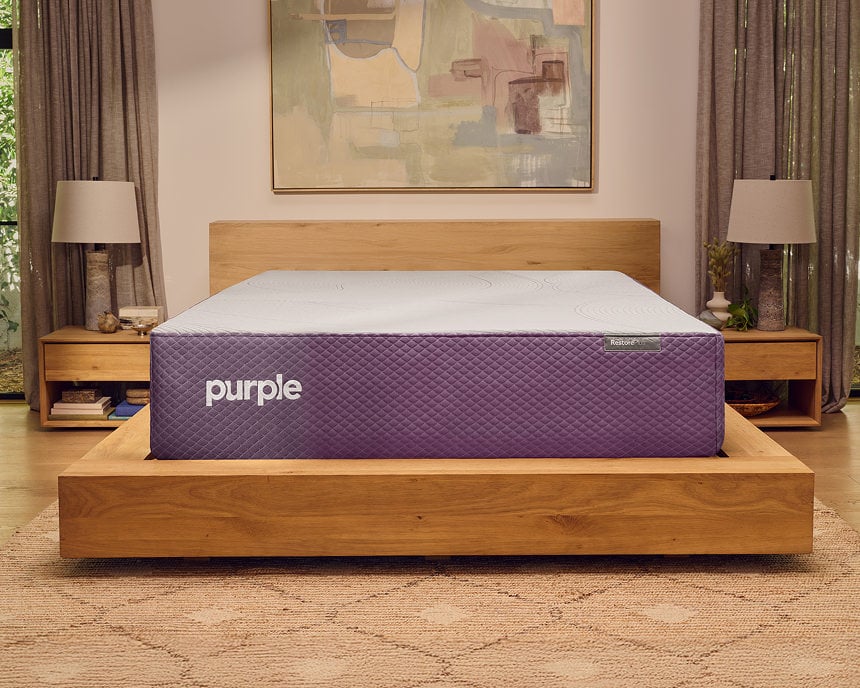
If you're in a dense all-foam mattress, this is one of the highest-leverage changes you can make. In our testing, the surface temperature difference between a good hybrid and a comparable all-foam mattress was consistently 2 to 4°F. That sounds small. At the margins of a 0.1°C thermoneutral zone, it isn't.
See our full guides: best mattresses for menopause hot flashes and what our cooling tests found.
What to discuss with a doctor
The most effective intervention: Hormone therapy reduced the frequency of hot flashes by 75–90% in clinical trials, with corresponding significant improvements in sleep efficiency, sleep onset latency, and nighttime awakenings compared to placebo. *(Polo-Kantola P, Obstetrics & Gynecology, 1998)*
Non-hormonal options also exist. Fezolinetant (FDA-approved 2023) blocks the neurokinin B receptor pathway implicated in hypothalamic dysregulation. Low-dose SSRIs and SNRIs reduce hot flash frequency through serotonin pathways. CBT-I (Cognitive Behavioral Therapy for Insomnia) addresses the conditioned arousal that can persist even after hot flashes improve.
You don't have to white-knuckle through years of bad sleep if other options are available.
The short version
Menopause disrupts sleep through night sweats, direct hormonal effects on sleep architecture, increased cortisol reactivity, and heightened sleep apnea risk. The most useful non-medical changes: keep the bedroom cooler than you think you need to, get out of an all-foam mattress, and switch to breathable natural bedding. If those changes aren't enough, a conversation about medical options is worth having.
Related Reading
Compare top picks side by side →Full ranked list
Best Mattress for Women in Menopause
See every mattress we tested for women in menopause, ranked by performance score.
Top Picks for Women in Menopause
See full list →Ranked by test data
Not sure which mattress is right for you?
Take our 60-second quiz and we'll match you with the best options for your sleep style and budget.
Take the Free Quiz →