Best Mattress Firmness for Joint Pain During Menopause
Joint pain during menopause isn't separate from your sleep problems. Estrogen loss is the common thread. Getting firmness right can reduce both the pain and the sleep disruption.
A lot of women going through menopause find themselves dealing with joint pain they didn't have before. Knees that ache in the morning. Hips that make rolling over in bed uncomfortable. Hands that stiffen overnight. It's easy to assume this is just aging. The reality is more specific: estrogen loss is a direct driver of joint inflammation, and the same hormonal shift that's disrupting your sleep is making your joints hurt.
This matters for mattress selection because the overlap changes what "the right firmness" actually means.
Why estrogen loss causes joint pain
Estrogen has significant anti-inflammatory effects. Estrogen receptors exist in joint cartilage, synovial tissue, and bone. Estrogen helps regulate the production of inflammatory cytokines and plays a role in cartilage maintenance. When estrogen declines, inflammation in the joints increases. Cartilage may thin faster.
Research: Estrogen deficiency is associated with increased levels of inflammatory cytokines including interleukin-1 and tumor necrosis factor-alpha, both of which contribute to synovial inflammation and joint pain. The relationship between menopause and increased musculoskeletal symptoms is well-established in rheumatology literature. (Braidman IP, Journal of Bone and Mineral Research, 2006)
The joint pain that appears during perimenopause isn't incidental. It's the same hormonal mechanism as the night sweats and the sleep disruption. They're different symptoms of the same underlying shift.
How joint pain interacts with sleep
Joint pain disrupts sleep in two ways. First, direct discomfort: pressure on inflamed joints causes waking. Second, positional: inflammation makes certain sleep positions painful, which means more frequent position changes, which means more sleep fragmentation.
For women who are also dealing with night sweats, this compounds everything. A night sweat wakes you up. Returning to sleep in a position that hurts makes it harder to get back down. The window for deep sleep shrinks from both ends.
Pressure relief matters more than firmness number: The right mattress for menopausal joint pain isn't about hitting a specific firmness number on a scale of 1 to 10. It's about distributing pressure away from inflamed joints so those joints aren't bearing the full load of your body weight through the night.
What firmness actually means for joint pain
Firmness is a surface sensation. It describes how the mattress feels when you first lie down. Support is what the mattress is doing structurally underneath you over time. For joint pain, both matter but in different ways.
Too firm: The mattress doesn't give enough at pressure points (shoulder, hip, knee). The joint bears the load directly. This creates the morning ache that's worse than when you went to bed.
Too soft: The joint sinks deeply into the mattress. The surrounding tissue has to compensate, and you end up sleeping in a subtly bent position for hours. This is a different kind of pain and often worse for back and hip joints specifically.
The right zone: Enough give at the joint to redistribute pressure across a wider surface area, combined with enough support underneath that the spine stays aligned and the joint isn't held in a compromised position all night.
Firmness by joint pain location
| Joint affected | Sleep position typically preferred | Ideal firmness | What to look for |
|---|---|---|---|
| Hip pain | Side (unaffected side) | Medium-soft | Deep pressure relief at hip; shouldn't bottom out |
| Knee pain | Side with pillow between knees | Medium | Even pressure distribution; responsive material |
| Shoulder pain | Back or side (unaffected) | Medium-soft | Shoulder needs to sink without the whole torso rolling |
| Lower back / SI joint | Back | Medium-firm | Lumbar support without hard surface pushing up |
| Hands / wrists | Any | Less dependent on firmness | More about positioning than mattress |
| Multiple joints | Back (often easiest) | Medium | Balance of pressure relief and neutral alignment |
The side sleeping complication: Side sleeping is often more comfortable for joint pain because it takes load off the spine. But it creates high pressure at the shoulder and hip. If you have hip or shoulder inflammation, side sleeping on a firm mattress can make those joints worse overnight. Medium-soft is usually the answer, but go too soft and the hip drops and the lower back compensates.
Why menopause specifically changes the firmness calculation
Before menopause, most women can tolerate a wider range of firmness without significant joint consequences. The anti-inflammatory protection from estrogen means joints recover from nighttime pressure relatively quickly.
During and after menopause, that buffer is gone. The same pressure that was fine at 40 can cause meaningful inflammation and morning stiffness at 52. Women often find that a mattress that worked well for years stops working, not because the mattress changed, but because the body's ability to tolerate pressure at joints changed.
This is worth knowing because it means firmness recommendations from general mattress guides may underestimate the softness needed for menopausal joint pain. A "medium" that's appropriate for a 35-year-old may be too firm for a 55-year-old dealing with estrogen-related joint inflammation.
What mattress types work best
Latex is the best material for menopausal joint pain. It pushes back against the joint actively rather than slowly conforming like memory foam. This means pressure is distributed immediately and the joint isn't held in a sinking position that gets progressively deeper through the night. Latex also sleeps cooler, which matters for women dealing with night sweats on top of joint pain.
Hybrid (coil + latex or responsive foam) is the most practical recommendation for most women. The coil base provides real structural support so the spine stays aligned. The latex or foam on top handles pressure relief at the joint. Hybrids also sleep cooler than all-foam options.
Memory foam is good at pressure relief but has two problems for menopausal joint pain. First, it sleeps hot, which is a problem if you're also managing night sweats. Second, it has a slow response time. As the night goes on, you sink progressively deeper into the foam, and the joint ends up in a position it wasn't in when you fell asleep.
Research: Latex mattresses demonstrated superior pressure distribution at shoulder and hip contact points compared to memory foam alternatives, with lower peak interface pressures that remained stable through the night rather than increasing as occurs with progressive foam compression. (Jacobson BH, Sleep Health, 2010)
Specific recommendations
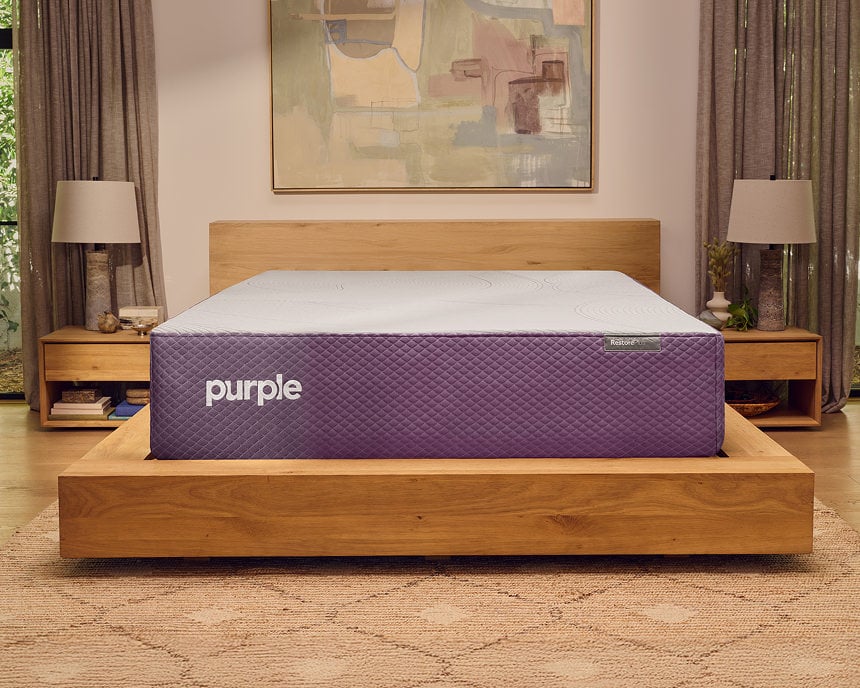
Natural Talalay latex over coils. The latex layer responds immediately to joint pressure rather than slowly conforming. The coil base keeps the spine aligned. If hot flashes are also a concern, every layer of this mattress is working in the right direction.
The lumbar support bar prevents center sag, which is the common failure mode for mattresses used with back and hip pain. Available in Luxury Firm, which works well for back sleepers with lower back pain, and Plush Soft, which works for side sleepers with hip and shoulder involvement.
Designed specifically for side sleepers. Pressure relief at the shoulder and hip is the primary design goal. For women whose joint pain is concentrated there, this is worth testing.
One thing to do before buying
If joint pain is severe enough to regularly disrupt sleep, see a rheumatologist or your GP before spending $1,500 on a mattress. Menopausal joint pain is sometimes a sign of conditions like osteoarthritis or inflammatory arthritis that benefit from specific treatment. The right mattress helps. The right mattress plus appropriate treatment helps more.
Related Reading
Full ranked list
Best Mattress for Women in Menopause
See every mattress we tested for women in menopause, ranked by performance score.
Top Picks for Women in Menopause
See full list →Ranked by test data
Not sure which mattress is right for you?
Take our 60-second quiz and we'll match you with the best options for your sleep style and budget.
Take the Free Quiz →